Product Guides/Blends
Peptide Stacks and Blends: Blend or Single Vials?
Quick answer
A peptide stack is two or more peptides studied together, and a blend is a stack that has been freeze-dried into a single vial at a fixed ratio. Choose a pre-mixed blend when the protocol uses the peptides in the ratio on the label and you want one reconstitution and one certificate. Choose single vials when you need a different ratio or want to study each peptide on its own.
- Blend: one vial, fixed ratio, fewer steps.
- Single vials: any ratio, each peptide can be used alone.
- Either way: check that every peptide is identified on the lot certificate.
Key takeaways
- Stack vs blend: a stack is the idea, a blend is the product.
- Why combine: the peptides act on different pathways, so researchers study whether the effects add up.
- Evidence: most data on each peptide comes from animal and cell studies of single compounds. Combination data is thin.
- Blend math: each peptide in a blend has its own concentration after mixing.
- Quality: a blend certificate should name and identify every peptide in the vial.
Stacks are one of the most searched topics in peptide research, and one of the most confusing. The word covers everything from a published combination to a list someone made up. This guide sticks to combinations that exist as real products in our healing and recovery and performance and vitality categories, explains why each pair is combined, and helps you decide between a pre-mixed blend and separate vials.
Our products are for research use only. This guide describes what published research has looked at. It is not advice on use in people, and it does not suggest amounts or schedules.
What a peptide stack is
A stack is simply two or more peptides used in the same study. Researchers combine compounds when each one acts on a different target and they want to know whether the effects are independent, additive or something more. A blend is the practical form of a stack: the peptides are mixed at the factory and freeze-dried together, so the vial already contains the combination at a set ratio.
| Term | Meaning | Example |
|---|---|---|
| Single peptide | One compound per vial | BPC-157 |
| Stack | Two or more peptides studied together, from separate vials or a blend | BPC-157 with TB-500 |
| Blend | A stack freeze-dried into one vial at a fixed ratio | BPC-157 / TB-500 blend |
Blend or single vials: how to choose
| Pre-mixed blend | Separate single vials | |
|---|---|---|
| Reconstitutions | One | One per peptide |
| Ratio | Fixed by the label | Any ratio you choose |
| Using one peptide alone | Not possible | Possible, useful as a control |
| Certificates to check | One lot, one report | One per vial |
| Handling steps | Fewer | More |
| Best for | Protocols that already use the label ratio | Ratio comparisons and single-compound controls |
Step 1: Check the ratio your protocol needs
If it matches the blend on the label, the blend is the simpler route. If not, you need single vials.
Step 2: Decide whether you need controls
To show that a combination does more than its parts, a study needs each part tested alone. That calls for single vials alongside the blend.
Step 3: Count the handling steps
Every reconstitution is a chance for a measuring error or contamination. One vial means fewer chances. The trade-offs for the most common pair are laid out in pre-mixed blend vs two vials.
Step 4: Read the certificate
Each peptide in a blend should be identified on the lot report. See how to read a peptide COA for what that looks like, and the certificates of analysis page for our lots.
BPC-157 and TB-500
This is the best known pairing in repair research. BPC-157 is a 15 amino acid peptide first identified in gastric juice. TB-500 is a synthetic fragment related to thymosin beta-4, a protein involved in cell movement.
The two are combined because they are thought to work through different mechanisms. The review Stable Gastric Pentadecapeptide BPC 157 and Wound Healing (Seiwerth et al., Frontiers in Pharmacology, 2021) summarizes animal work on blood vessel formation and tissue repair, while Thymosin beta4: a multi-functional regenerative peptide (Goldstein et al., Expert Opinion on Biological Therapy, 2012) covers cell migration and actin regulation. The reasoning behind the pair is covered in why BPC-157 and TB-500 are combined.
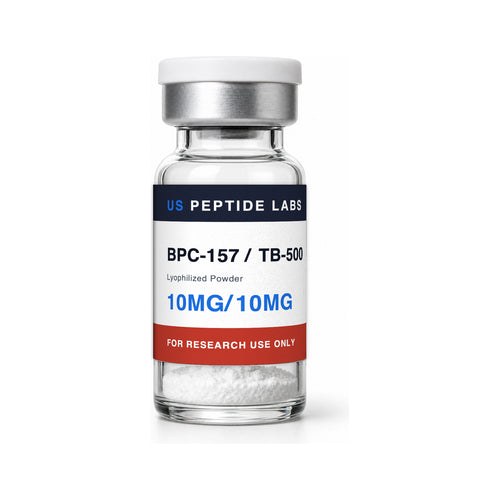
BPC-157 / TB-500 blend
Both peptides in one freeze-dried vial. One reconstitution, one lot, one certificate.
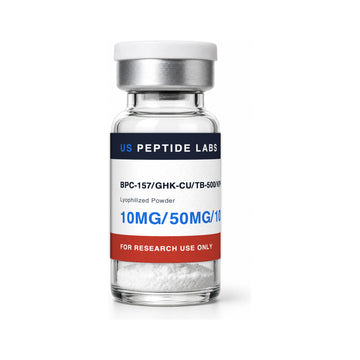
The four-peptide repair blend: BPC-157, GHK-Cu, TB-500 and KPV
This blend adds two more compounds to the pair above. GHK-Cu is a copper-binding tripeptide found in human plasma, reviewed in Regenerative and Protective Actions of the GHK-Cu Peptide in the Light of the New Gene Data (Pickart and Margolina, International Journal of Molecular Sciences, 2018). KPV is a three amino acid fragment of a hormone called alpha-MSH that is studied in inflammation models.
Because GHK-Cu carries copper, the powder and the solution are blue. That is expected. A full description is in what the BPC-157, GHK-Cu, TB-500 and KPV blend is.
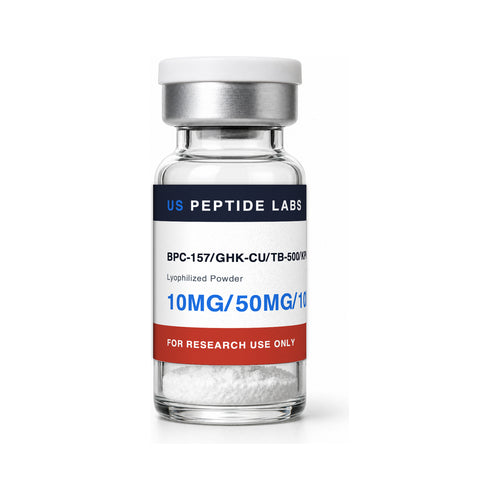
BPC-157 / GHK-Cu / TB-500 / KPV blend
Four peptides in one vial for labs studying several repair pathways at once.
CJC-1295 and Ipamorelin
This pair comes from growth hormone research. The two peptides act on different receptors that both lead to growth hormone release, which is the textbook reason for studying them together.
- CJC-1295 is an analog of growth hormone releasing hormone. A clinical study, Prolonged stimulation of growth hormone (GH) and insulin-like growth factor I secretion by CJC-1295 (Teichman et al., Journal of Clinical Endocrinology and Metabolism, 2006), reported sustained increases after a single administration in healthy adults.
- Ipamorelin acts on the ghrelin receptor and belongs to the group known as growth hormone secretagogues. It was first described in Ipamorelin, the first selective growth hormone secretagogue (Raun et al., European Journal of Endocrinology, 1998).
Neither compound is an approved medicine. More background is in why CJC-1295 and Ipamorelin are combined.
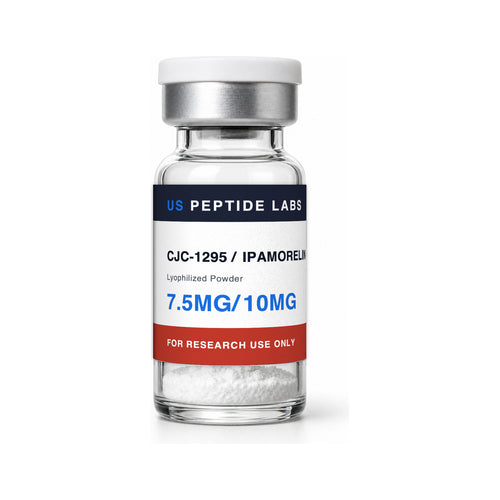
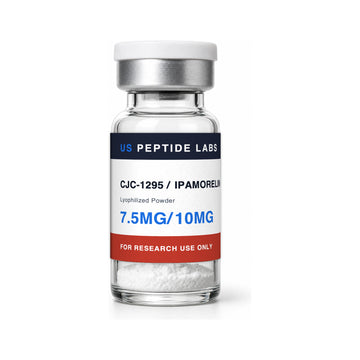
CJC-1295 / Ipamorelin blend
Both peptides in a single freeze-dried vial at a fixed ratio.
Blends in spray form
Some combinations are also sold pre-mixed as sprays, which removes the reconstitution step completely. The format question is covered in peptide nasal spray vs oral spray vs vial.
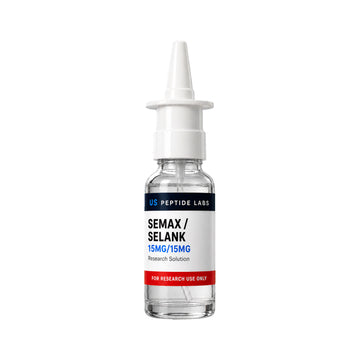
Semax / Selank Nasal Spray
Two peptides from the cognitive and mood category in one bottle.
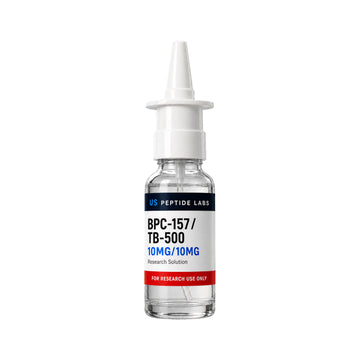
BPC-157 / TB-500 Nasal Spray
The repair pair in a ready-made nasal format.
All blends at a glance
| Blend | Format | Research area | Single vials available |
|---|---|---|---|
| BPC-157 / TB-500 | Vial | Tissue repair models | BPC-157, TB-500 |
| BPC-157 / GHK-Cu / TB-500 / KPV | Vial | Repair and inflammation models | BPC-157, TB-500, GHK-Cu |
| CJC-1295 / Ipamorelin | Vial | Growth hormone axis | Not offered separately |
| Semax / Selank | Nasal spray | Cognitive research | Semax, Selank |
| BPC-157 / TB-500 | Nasal spray | Tissue repair models | See vial row above |
- 1Does the label ratio fit?
- 2Do you need single-compound controls?
- 3Is every peptide on the certificate?
- 4Order the blend, the singles or both
Handling a blend
Reconstitution
A blend is mixed the same way as any freeze-dried vial, but the math applies to each peptide. If a vial holds 10 mg of one peptide and 10 mg of another and you add 2 mL of water, each is at 5 mg/mL. The full method is in how to reconstitute peptides.
Mixing your own from single vials
Labs that combine single vials usually reconstitute each one separately and keep them as separate solutions. Whether two specific peptides can share a vial is discussed in can you mix BPC-157 with TB-500.
Storage
The rules are the same as for single peptides: powder cold and dry, mixed vials in the fridge for about four weeks. See how to store peptides.
Sources
- Seiwerth S, et al. Stable Gastric Pentadecapeptide BPC 157 and Wound Healing. Frontiers in Pharmacology, 2021.
- Goldstein AL, et al. Thymosin beta4: a multi-functional regenerative peptide. Basic properties and clinical applications. Expert Opinion on Biological Therapy, 2012.
- Pickart L, Margolina A. Regenerative and Protective Actions of the GHK-Cu Peptide in the Light of the New Gene Data. International Journal of Molecular Sciences, 2018.
- Teichman SL, et al. Prolonged stimulation of growth hormone (GH) and insulin-like growth factor I secretion by CJC-1295, a long-acting analog of GH-releasing hormone, in healthy adults. Journal of Clinical Endocrinology and Metabolism, 2006.
- Raun K, et al. Ipamorelin, the first selective growth hormone secretagogue. European Journal of Endocrinology, 1998.
- Wikipedia. Growth hormone secretagogue.
Shop Peptide Blends
American-made research peptides with an independent lab certificate for every lot.
Frequently asked questions
What is a peptide stack?
A peptide stack is two or more peptides studied together in the same protocol. The peptides can come from separate vials or from a single pre-mixed blend.
What is the difference between a stack and a blend?
A stack is the combination itself. A blend is a stack that has been freeze-dried into one vial at a fixed ratio by the manufacturer.
Is a blend better than buying two vials?
It depends on the protocol. A blend means one reconstitution and one certificate. Two vials let you change the ratio and test each peptide alone.
Why are BPC-157 and TB-500 stacked?
They are thought to act through different mechanisms in repair models, so researchers study them together to see whether the effects add up. Most evidence comes from animal studies of each peptide alone.
Can you mix two peptides in the same vial?
Not as a general rule. Whether two peptides are stable together depends on their sequences, the pH and the concentration. Factory blends are made and tested as blends.
How do you calculate concentration for a blend?
Do the math for each peptide separately. Divide the milligrams of each peptide on the label by the milliliters of water added.
Does a blend have one COA or several?
One. A blend is a single lot, and its certificate should identify every peptide in the vial.
Are peptide blends approved medicines?
No. The blends sold here are research materials for laboratory use only and are not approved to diagnose, treat or prevent any condition.
Why is the four-peptide blend blue?
It contains GHK-Cu, a copper-binding peptide. Copper gives both the powder and the solution a blue color, which is normal.
Do blends need different storage?
No. Store the powder cold and dry and keep a mixed vial in the fridge for about four weeks, the same as a single peptide.
For research use only. Not for human consumption. These statements have not been evaluated by the Food and Drug Administration. Products sold by US Peptide Labs are not intended to diagnose, treat, cure or prevent any disease.
Last reviewed November 16, 2026. We review each guide every one to two months and update the date when the text changes.