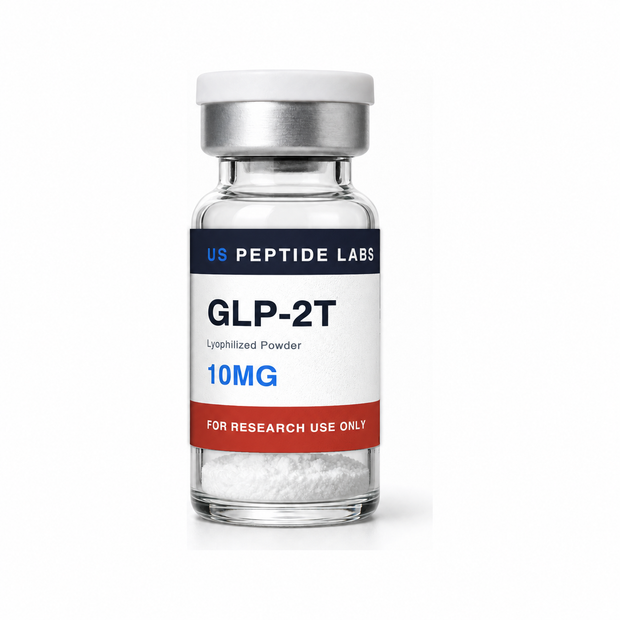
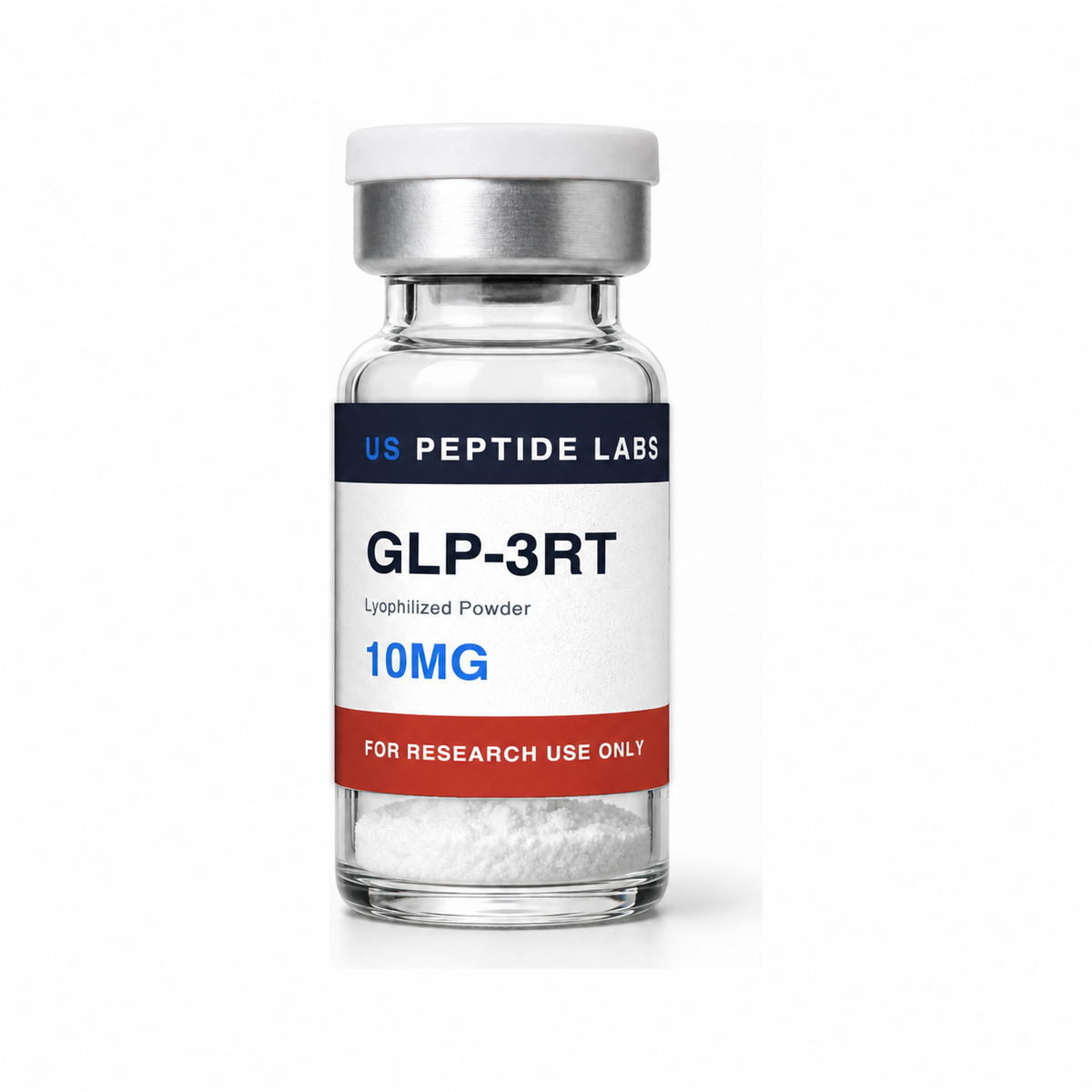
Vial products ship as dry lyophilized material unless the product format explicitly states otherwise.
10mL Vial99%+ PurityGLP-1 / Weight Management
10mL Vial
GLP-3RT
Triple-agonist GLP-1/GIP/glucagon research peptide
$100.00
Volume pricing
Per-unit price drops automatically as quantity increases.
| Strength | 1 | 2+ | 5+ |
|---|---|---|---|
| 10mg | $100.00 | $95.00 | $90.00 |
| 20mg | $170.00 | $161.50 | $153.00 |
| 40mg | $300.00 | $285.00 | $270.00 |
Per-unit pricing at each quantity break, applied automatically at checkout.
Triple-agonist GLP-1/GIP/glucagon research peptide
Lot documentation
Certificate of Analysis
Your lot number is stamped on the base of the vial or bottle. Match it to the list to open the certificate for the exact material you received.
- Lots on file
- 13
- Laboratory
- AxisPharm, LLC
What the literature reports
GLP-3RT is an investigational triple agonist of GIP, GLP-1, and glucagon receptors that has been examined in phase 2 clinical trials for obesity, type 2 diabetes, and hepatic fat fraction.
-
In a phase 2 trial in adults with obesity, investigators observed graded body-weight reductions across study arms at 48 weeks versus placebo.
-
In a phase 2 trial in adults with type 2 diabetes, researchers reported greater HbA1c and body-weight reductions with GLP-3RT than with placebo or dulaglutide at higher study arms.
-
In a phase 2a substudy in participants with obesity and elevated liver fat, MRI-PDFF measurements showed large relative reductions in hepatic fat fraction versus placebo.
These summaries describe findings reported in published laboratory and clinical literature about this compound. They are provided for research context only. They are not claims about this product, and nothing here describes an intended use in humans or animals. This material is supplied strictly for laboratory research use.
Technical documentation
About GLP-3RT
Technical overview
Incretin-pathway triple agonist (GIP / GLP-1 / glucagon receptor)
GLP-3RT (LY3437943) is an investigational peptide agonist engineered to activate three receptors in the incretin/glucagon family: GIP, GLP-1, and glucagon receptors. It has been evaluated in company-sponsored clinical trials, including a prominent phase 2 obesity study published in the New England Journal of Medicine and earlier multiple-ascending-dose work in type 2 diabetes.
Researchers focus on GLP-3RT because dual and triple agonists extend the pharmacology already established for GLP-1 receptor agonists. In the phase 2 obesity trial, once-weekly subcutaneous escalation regimens produced substantial, dose-dependent mean body-weight reductions over 48 weeks compared with placebo, alongside metabolic marker changes typical of this class. Gastrointestinal adverse events were the most frequently discussed tolerability theme, consistent with incretin mimetics.
Educational dosage content should cite trial arms and titration schedules as documented research protocols. GLP-3RT remains investigational for the indications studied in those papers and is not framed here as consumer guidance. Research-use discussions of vial sizes outside formal trials must stay clearly separated from labeled clinical development doses.
Mechanism of action
GLP-3RT simultaneously engages GIP receptor, GLP-1 receptor, and glucagon receptor pathways. GLP-1 receptor activation is associated with enhanced glucose-dependent insulin secretion, slowed gastric emptying, and central appetite signaling. GIP receptor activity adds another incretin axis that may support insulinotropic and adipose-tissue effects in combination regimens. Glucagon receptor engagement is explored for energy-expenditure and hepatic lipid-metabolism contributions. The triple design aims to combine reduced energy intake with metabolic effects not fully captured by GLP-1 agonism alone.
Research applications
- obesity clinical research
- type 2 diabetes
- incretin pharmacology
- body-weight regulation
- cardiometabolic markers
Fields of active investigation, not claims. Investigation is not proof.
Endocrinology and obesity-medicine trialists, metabolic pharmacologists, and translational teams comparing multi-receptor agonists with GLP-1 S- or GLP-2T-class agents. Academic groups analyze body-composition and liver-fat secondary endpoints. This audience is clinical-research oriented rather than cosmetic or injury-repair focused.
Amounts reported in the literature
What published research and laboratory protocols document. These describe what was studied — they are not instructions, recommendations, or a protocol for use.
| Reported amount | Frequency | Route | Research context |
|---|---|---|---|
| 1 mg – 12 mg | once weekly | subcutaneous | Phase 2 obesity trial maintenance dose arms (Jastreboff et al., NEJM 2023) |
| 500 mcg – 12 mg | once weekly (study-defined) | subcutaneous | Phase 1b multiple-ascending-dose work in type 2 diabetes (LY3437943) |
Handling and storage
Follow manufacturer or trial pharmacy instructions for investigational product. Research lyophilizates are typically kept refrigerated, protected from light; reconstituted multi-dose research vials are refrigerated and timed to supplier stability limits. Do not freeze reconstituted solutions unless a COA explicitly allows it.
Notes on combined research
Formal trials study GLP-3RT as monotherapy against placebo or active comparators, not as part of informal peptide stacks. Combining with other incretin agents would duplicate pathway stimulation and is outside evidence-based research design. Lifestyle and background diabetes medications in trials are protocol-defined, not ad-hoc stacks.
Analytical specifications
| Format | 10mL Vial |
|---|---|
| Physical form | Lyophilized powder |
| Third-party laboratory | AxisPharm, LLC |
| Lots with COA on file | 13 |
| Also referred to as | LY3437943, triple agonist, GGG tri-agonist |
| Reported half-life | Engineered for once-weekly administration in clinical development (long-acting incretin-class peptide kinetics) |
Identity and purity are documented per lot on the Certificate of Analysis for the material you receive. Lot, manufacture and expiry are stamped on the base of the vial or bottle.
Frequently asked questions
What is the dosage for GLP-3RT?
In the landmark phase 2 obesity trial, participants received once-weekly subcutaneous GLP-3RT with maintenance doses of 1 mg, 4 mg, 8 mg, or 12 mg after escalation at higher strengths. Those figures are documented clinical-research arms, not a consumer recommendation. Always cite the primary NEJM protocol when discussing dose.
How much bac water for GLP-3RT?
Trial product is pharmacy-prepared; research vials sold as lyophilized powder require label-specific diluent volumes. Choose a diluent volume that makes weekly mg doses easy to measure on an insulin syringe (for example, concentrating so that 0.1-0.5 mL matches the intended mg). Calculate from vial_mg / mL.
GLP-3RT dosage per day
Clinical development uses weekly—not daily—dosing. Dividing a weekly mg amount into daily micro-doses is not how the phase 2 obesity protocol was written. Educational charts should show mg per week and titration steps.
GLP-3RT dosage chart
A literature-faithful chart lists escalation steps toward 4, 8, or 12 mg weekly maintenance, including the lower 1 mg arm. Higher-dose groups in phase 2 used gradual increases every four weeks to improve gastrointestinal tolerability. Reproduce numbers from the peer-reviewed methods section.
How long does GLP-3RT take?
In the 48-week phase 2 obesity study, mean weight-change curves separated over months, with large effects reported by week 48 at higher doses. Early gastrointestinal symptoms, when they occur in incretin trials, often appear during escalation. Timelines are trial endpoints, not guarantees for any individual.
What is the half life of GLP-3RT?
GLP-3RT was designed as a long-acting molecule compatible with once-weekly subcutaneous dosing. Exact terminal half-life values should be taken from clinical pharmacology sections of sponsor publications rather than informal blogs.
Can GLP-3RT be stacked with other peptides?
Pivotal studies evaluate it alone within controlled backgrounds. Stacking with other GLP-1 or GIP agents is not an evidence-based research protocol and may compound mechanism-overlapping effects. Educational sites should discourage casual polypharmacy framing.
How is GLP-3RT dosage calculated from a research vial?
mg_dose = concentration_mg_per_mL x mL_drawn. If a 20 mg vial is reconstituted with 2 mL, concentration is 10 mg/mL, so 0.4 mL provides 4 mg. Use a calculator and dual-check units before any research preparation.
References
Every reference below resolves to an indexed paper. We would rather cite less and cite accurately.
- Triple-Hormone-Receptor Agonist GLP-3RT for Obesity - A Phase 2 Trial.
- LY3437943, a novel triple GIP, GLP-1, and glucagon receptor agonist in people with type 2 diabetes: a phase 1b, multicentre, double-blind, placebo-controlled, randomised, multiple-ascending dose trial.
- GLP-3RT, a GIP, GLP-1 and glucagon receptor agonist, for people with type 2 diabetes: a randomised, double-blind, placebo and active-controlled, parallel-group, phase 2 trial conducted in the USA.
Research use only
For laboratory and research purposes only. Not for human consumption, veterinary use, or medical applications. This product is not a drug, food, supplement or cosmetic, is not approved by the FDA, and is not intended to diagnose, treat, cure or prevent any disease. This page summarises published scientific literature; it is not medical advice and not a recommendation to use this compound. All handling must be performed by qualified personnel in a controlled laboratory environment.
Made in America. Documented lot by lot.
Most peptides sold in this category are imported in bulk, repackaged, and sold with no paperwork attached to the material in the bottle. Ours are synthesized in United States laboratories and every lot carries its own certificate.
Where is this material made?+
In United States laboratories. We buy from domestic synthesis rather than importing finished bulk from an overseas supplier and relabeling it. That is the reason we are able to name a specific laboratory, lot and test date for what you receive.
Why does a US laboratory matter?+
A domestic supply chain is shorter and documented end to end: identifiable facilities operating under US laboratory practice, and paperwork that follows one specific lot instead of a generic product description. It also means shorter transit and no repackaging between the laboratory and the customer.
What documentation comes with a lot?
A lot-specific Certificate of Analysis from an independent laboratory. The lot number is stamped on the base of the container — match it against the certificates listed on this page, or scan the QR code on the label, to open the report for the exact material shipped.
Where does my order ship from?+
Our United States facility, packed and dispatched domestically with tracking. Orders do not transit customs or get repackaged en route.
Pairs well with.
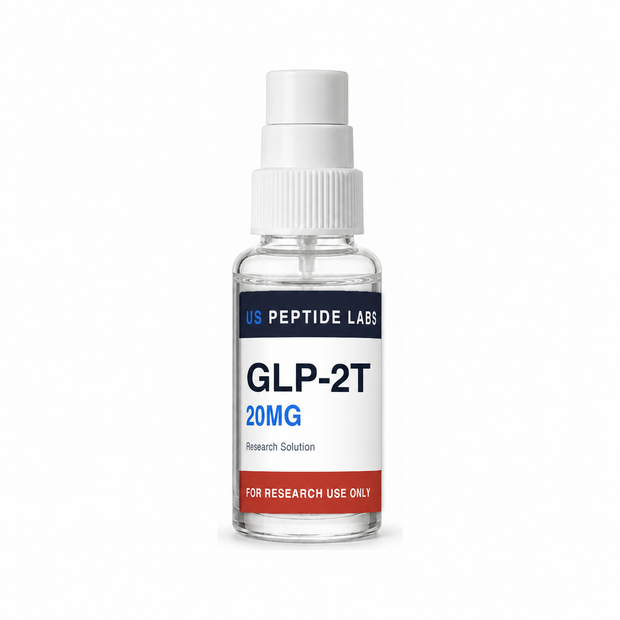
Research Peptide
GLP-2T Oral Spray
GLP-2T — oral formatThis listing supplies the compound in an orally administered format rath...
from $145.00