Product Guides/Formats
Peptide Nasal Spray vs Oral Spray vs Vial: How to Choose a Format
Quick answer
A freeze-dried vial is the most flexible and longest lasting format, a nasal spray is pre-mixed and ready to use with no reconstitution, and an oral spray is the simplest to handle but faces the hardest absorption path. Choose a vial when the protocol needs control over concentration, and a spray when it needs the same fixed solution every time with no mixing step.
- Vial: dry powder, you set the concentration, longest shelf life.
- Nasal spray: ready-made liquid, fixed concentration, nasal route research.
- Oral spray: ready-made liquid, no needles or mixing, oral route research.
Key takeaways
- Same compound, different format: the peptide is the same. What changes is preparation, concentration control and shelf life.
- Vials: need bacteriostatic water and clean technique, last longest as powder.
- Nasal sprays: no mixing. The nasal route avoids first-pass metabolism in published research, but large peptides cross poorly.
- Oral sprays: easiest handling. Oral uptake of peptides is low and varies by compound.
- Every format: carries a QR code on the label that opens its lot certificates.
Many of our research peptides come in more than one format. The same compound can be a freeze-dried vial, a pre-mixed nasal spray or an oral spray, and the price, the handling and the shelf life are different for each. This guide compares the three so you can pick the one that fits the work, with links to the research nasal sprays, the oral sprays and the vials they are based on.
Everything here is about laboratory research formats. Our products are for research use only, and nothing below is advice on use in people. Published studies on each route are summarized so you know what the research does and does not show.
Vial vs nasal spray vs oral spray at a glance
| Freeze-dried vial | Nasal spray | Oral spray | |
|---|---|---|---|
| Example | BPC-157 vial | BPC-157 / TB-500 nasal spray | GLP-2T oral spray |
| Form on arrival | Dry powder | Ready-made liquid, 15 mL | Ready-made liquid |
| Preparation | Reconstitute with bacteriostatic water | None | None |
| Concentration | You choose it | Fixed by the maker | Fixed by the maker |
| Extra supplies | Water, swabs, sterile syringes | None | None |
| Shelf life | Longest as powder, about four weeks once mixed | As stated on the label | As stated on the label |
| Room for error | Mixing and math mistakes are possible | Very little | Very little |
| Route studied | Depends on the protocol | Intranasal | Oral and sublingual |

The freeze-dried vial
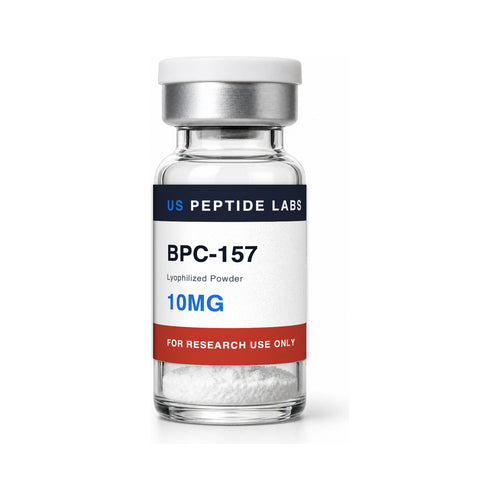
The vial is the original research format. The peptide is freeze-dried into a powder that keeps for a long time, and the lab adds water when the work begins. That gives full control: you decide the volume and so the concentration, and you can match a published protocol exactly.
The cost of that control is a preparation step. You need bacteriostatic water, alcohol swabs, sterile syringes and a clean routine, and the mixed vial then has about four weeks in the fridge. The full process is in how to reconstitute peptides.
When a vial is the right choice
- The protocol specifies a concentration that a fixed spray does not match.
- The material will be stored for months before use.
- You want the lowest cost per milligram.
- The study compares concentrations and needs more than one from the same lot.
The nasal spray
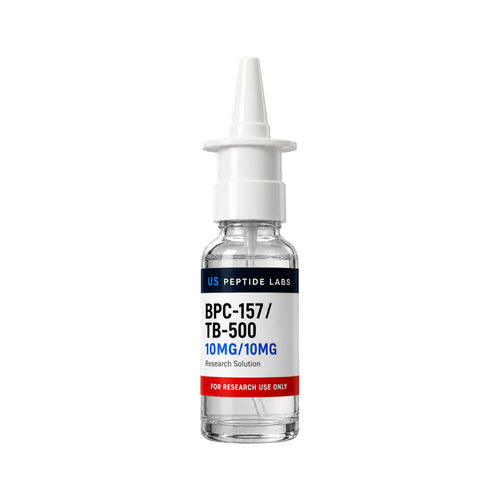
A nasal spray supplies the compound already dissolved, in a 15 mL bottle with a spray pump. There is nothing to mix and nothing to calculate. Every bottle of the same product has the same concentration, which is useful when consistency between runs matters more than flexibility.
What research says about the nasal route
The inside of the nose has a large surface with a rich blood supply, which is why nasal administration has been studied for decades. A compound absorbed there enters the blood without passing through the gut and liver first, so it avoids the first pass effect.
There are limits. The review Nasal drug delivery: possibilities, problems and solutions (Illum, Journal of Controlled Release, 2003) explains that small molecules cross the nasal lining well, while larger peptides and proteins cross poorly without help, and that the nose clears liquid from its surface within minutes. A second line of work, including Intranasal delivery bypasses the blood-brain barrier to target therapeutic agents to the central nervous system (Hanson and Frey, BMC Neuroscience, 2008), looks at pathways along the olfactory and trigeminal nerves in animal models.
When a nasal spray is the right choice
- The research question is about the intranasal route itself.
- You want a fixed concentration with no mixing step.
- The lab does not want to stock water, swabs and syringes.
- Several people handle the material and you want less room for preparation errors.
The oral spray
An oral spray is also pre-mixed. It is the easiest format to handle: no reconstitution, no needles, no measuring. The question with this format is the route, not the handling.
What research says about the oral route
Peptides have a hard time in the mouth and gut. Enzymes cut them apart and the gut lining lets very little through. The review Advances in oral peptide therapeutics (Drucker, Nature Reviews Drug Discovery, 2020) describes oral uptake of peptides as typically very low and dependent on special formulation. Some of the compound may be absorbed through the lining of the mouth, a route known as sublingual administration, but how much varies widely from one peptide to the next.
We go through a specific case in does oral BPC-157 work, and the difference between the two GLP-2T formats in GLP-2T vial vs oral spray.
When an oral spray is the right choice
- The research question is about oral or sublingual exposure.
- Handling has to be as simple as possible.
- You want a fixed, repeatable concentration.
How to choose a format, step by step
Step 1: Start from the protocol
If you are following a published method, use the format and route it used. Changing the route changes the experiment.
Step 2: Decide whether you need to set the concentration
If yes, you need a vial. If a fixed concentration is fine, a spray saves the preparation step and the mistakes that come with it.
Step 3: Think about how long it will sit
For material that will be stored for months, powder wins. For work that starts this week, a spray is ready on arrival.
Step 4: Check that the format is in stock for your compound
Not every peptide comes in every format. The table below shows the main options.
Step 5: Open the certificate
Whatever you choose, scan the QR code on the label or open the certificates of analysis page and match the lot number. Our guide on how to read a peptide COA explains the report.
- 1What does the protocol use?
- 2Do you need your own concentration?
- 3How long will it be stored?
- 4Is the lot certificate on file?
Which compounds come in which format
| Compound | Vial | Nasal spray | Oral spray |
|---|---|---|---|
| BPC-157 / TB-500 | Blend vial | Nasal spray | Not offered |
| Semax and Selank | Semax, Selank | Semax / Selank nasal spray | Not offered |
| NAD+ | NAD+ vial | NAD+ nasal spray | NAD+ oral spray |
| GLP-2T | GLP-2T vial | GLP-2T nasal spray | GLP-2T oral spray |
| GHK-Cu | GHK-Cu vial | GHK-Cu nasal spray | Not offered |
Nasal and oral sprays in our catalog
BPC-157 / TB-500 Nasal Spray
The two most studied repair peptides, pre-mixed in one 15 mL bottle. No reconstitution step.
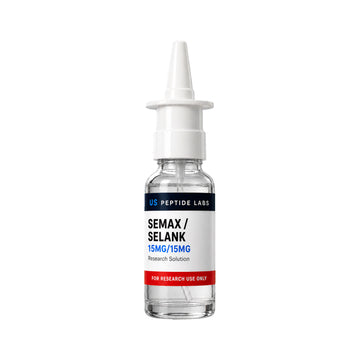
Semax / Selank Nasal Spray
Two peptides from the cognitive and mood category in a single spray. Both have a long history of intranasal research.
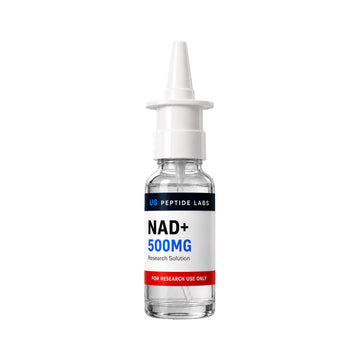
NAD+ Nasal Spray
NAD+ in a ready-made spray for labs that want to skip the mixing step that the vial needs.
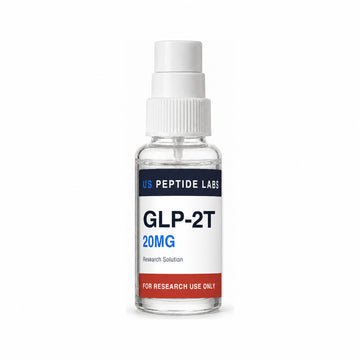
GLP-2T Oral Spray
The oral format of the dual agonist research compound, with a fixed concentration set by the maker.
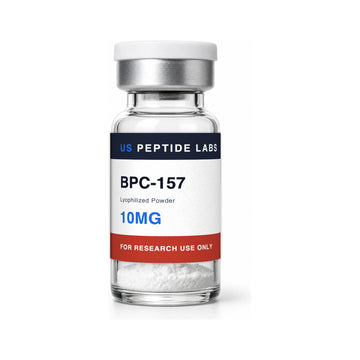
BPC-157 vial
The classic freeze-dried format, for labs that want to set their own concentration.
Storage differences between formats
Powder is the most forgiving format, and anything already in solution needs more care. Vials can be frozen while sealed. Sprays and mixed vials cannot. Each spray carries its own storage line and expiry date on the label, and that line overrides any general rule. The full chart is in how to store peptides.
Sources
- Illum L. Nasal drug delivery: possibilities, problems and solutions. Journal of Controlled Release, 2003.
- Hanson LR, Frey WH. Intranasal delivery bypasses the blood-brain barrier to target therapeutic agents to the central nervous system and treat neurodegenerative disease. BMC Neuroscience, 2008.
- Drucker DJ. Advances in oral peptide therapeutics. Nature Reviews Drug Discovery, 2020.
- Wikipedia. Nasal administration.
- Wikipedia. First pass effect.
- Wikipedia. Sublingual administration.
Shop Peptide Nasal Sprays
American-made research peptides with an independent lab certificate for every lot.
Frequently asked questions
What is a peptide nasal spray?
It is a research peptide supplied as a ready-made solution in a bottle with a nasal spray pump. The compound is the same as in the vial, but it arrives already dissolved at a fixed concentration.
Is a peptide nasal spray better than a vial?
Neither is better in general. A spray removes the mixing step and gives the same concentration every time. A vial lasts longer in storage and lets the lab choose the concentration.
Do peptide nasal sprays need to be reconstituted?
No. Nasal and oral sprays are pre-mixed. Only freeze-dried vials need reconstitution with bacteriostatic water.
How are peptides absorbed through the nose in research?
The nasal lining has a large surface and a rich blood supply, and compounds absorbed there avoid first-pass metabolism in the liver. Reviews note that large peptides cross the lining poorly and that the nose clears liquid within minutes.
Do oral peptides work?
Oral uptake of peptides is generally very low because enzymes break them down and the gut lining lets little through. How much is absorbed depends on the compound and the formulation, and it is an active research topic.
Which lasts longer, a vial or a spray?
A sealed freeze-dried vial lasts longest, especially in a freezer. Sprays are liquids and last until the expiry date on the bottle. A vial that has been mixed lasts about four weeks in the fridge.
Can I compare a spray and a vial by price?
Compare by the amount of peptide on the label. A spray includes the solution, the bottle and the pump, so the price per milligram is usually higher than for a vial.
Is BPC-157 available as a nasal spray?
Yes, as a BPC-157 / TB-500 nasal spray. BPC-157 on its own is supplied as a freeze-dried vial.
Do sprays come with a certificate of analysis?
Yes. Every vial, nasal spray and oral spray label carries a QR code that opens the certificates on file for that product. Match the lot number on the base of the bottle to the report.
Can I turn a vial into a spray?
We do not recommend it. A spray is made as a finished solution with its own concentration and container. For the intranasal or oral route, use the format made for it.
For research use only. Not for human consumption. These statements have not been evaluated by the Food and Drug Administration. Products sold by US Peptide Labs are not intended to diagnose, treat, cure or prevent any disease.
Last reviewed November 16, 2026. We review each guide every one to two months and update the date when the text changes.