Product Guides/Storage
How to Store Peptides: Powder, Mixed Vials and Sprays
Quick answer
Store freeze-dried peptide powder in the fridge at 2 to 8 degrees Celsius, or in a freezer at minus 20 for long-term storage, sealed, dry and away from light. Once a vial is reconstituted it stays in the fridge only, is never frozen and is best used within about four weeks. Pre-mixed sprays follow the storage line on their own label.
- Powder: fridge for months, freezer for longer.
- Mixed vial: fridge only, about four weeks.
- Sprays and bacteriostatic water: follow the label.
- Always: sealed, dark, upright and labeled with a date.
Key takeaways
- Water is the enemy: dry powder is stable, liquid is not. Most storage rules follow from that.
- Shipping: freeze-dried vials can travel at room temperature. Cold storage matters after delivery.
- Freezing: fine for unopened powder, harmful for a mixed vial.
- Light and heat: keep vials in the box and away from the fridge door.
- Dates: the expiry date is printed on the base of the vial next to the lot number.
How a peptide is stored decides how long it stays the same material you paid for. The rules are different for powder, for a mixed vial and for a ready-made spray, and mixing them up is the main reason research material goes bad early. This guide covers each format we sell, from healing and recovery vials to research nasal sprays, with one table you can keep next to the fridge.
All of this refers to laboratory storage of research materials. Our products are for research use only. The short version lives on the answer page do peptides need to be refrigerated.
Peptide storage chart
| Format | Short term | Long term | Never |
|---|---|---|---|
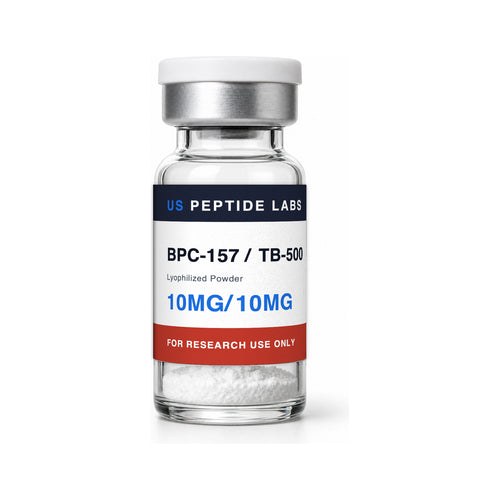
| Freeze-dried vial, unopened, such as BPC-157 / TB-500 | Room temperature during shipping is fine | Fridge at 2 to 8 C, or freezer at minus 20 C | Humid places, direct sun |
| Reconstituted vial | Fridge at 2 to 8 C | Not suited to long storage. About four weeks | Freezer, room temperature for hours |
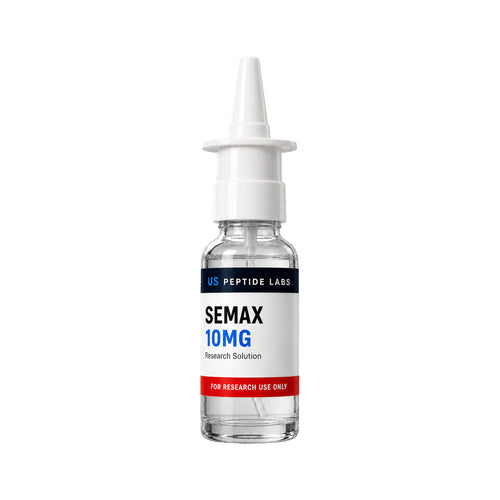
| Nasal or oral spray, such as Semax nasal spray | As stated on the label | Until the expiry date on the bottle | Freezer, a hot car |
| Bacteriostatic water, unopened | Room temperature | Until the expiry date | Freezer |
| Bacteriostatic water, opened | Room temperature or fridge | Discard 28 days after first puncture | Use past 28 days |
Why powder lasts and liquid does not
Peptides break down through a handful of chemical reactions, and nearly all of them need water. A widely cited review, Stability of protein pharmaceuticals: an update (Manning et al., Pharmaceutical Research, 2010), groups them into chemical changes such as hydrolysis, oxidation and deamidation, and physical changes such as clumping and sticking to surfaces.
Freeze drying takes the water away, so those reactions slow to a crawl. The classic paper on the subject, Rational design of stable lyophilized protein formulations: some practical advice (Carpenter et al., Pharmaceutical Research, 1997), describes a well made dry cake as the way to get a product through shipping and long storage. That is why your vial arrives as powder, and why the clock only really starts when you add water. The mixing step itself is covered in how to reconstitute peptides.
How to store freeze-dried peptide powder
Step 1: Check the vial when it arrives
Look at the seal, the stopper and the cake. Powder that has broken loose or sits on the stopper is normal after shipping. A cracked vial or a lifted seal is not. Find the lot number and the expiry date on the base and match the lot to its report on the certificates of analysis page.
Step 2: Put it away cold, in the box
For use within the next few months, the fridge is enough. For longer, use a freezer at minus 20 degrees Celsius. Keep the vial in its box or another closed container so it stays dark.
Step 3: Keep it dry
Moisture is what turns a stable powder into an unstable one. Do not store vials in a frost-free freezer drawer that cycles warm, and do not open a vial that is still cold.
Step 4: Warm it up before opening
When you are ready to use a vial, let it sit at room temperature for 15 to 20 minutes first. A cold vial pulls water out of the air the moment the stopper is pierced.
How to store reconstituted peptides
A mixed vial is a different product from the powder it came from. It is now a water solution, and it should be treated as fragile.
- Fridge at 2 to 8 degrees Celsius, upright, in the dark.
- Never the freezer. Ice crystals and repeated thawing damage peptides in solution.
- Label it with the concentration and the date it was mixed.
- Wipe the stopper and use a new sterile syringe every time you enter the vial.
- Plan to use it within about four weeks.
How long a specific mix lasts is covered for the most common blend in how long reconstituted BPC-157 / TB-500 lasts.
How to store nasal and oral sprays
Sprays arrive already in solution, so there is no dry phase to protect them. They are made with that in mind, and the storage line on the bottle is the rule to follow. In general that means cool, dark and upright with the cap on.
- Do not freeze a spray. Freezing can damage both the liquid and the pump.
- Do not leave it in a car, on a windowsill or near a heater.
- Keep the nozzle clean and capped between uses.
- Check the expiry date on the base of the bottle.
For a side by side look at the formats, see peptide nasal spray vs oral spray vs vial.
What damages peptides
| Threat | What it does | How to avoid it |
|---|---|---|
| Heat | Speeds up every breakdown reaction in solution | Fridge for anything liquid, back of the shelf |
| Moisture | Lets reactions start in dry powder | Keep sealed, warm to room temperature before opening |
| Light | Degrades some amino acids | Store in the box |
| Freeze and thaw cycles | Stress and clumping in mixed vials | Never freeze a reconstituted vial |
| Shaking | Foam and clumping | Swirl gently, carry vials upright |
| Contamination | Bacterial growth in the vial | Clean stopper, new syringe, bacteriostatic water as the diluent |
- 1Sealed powder in freezer
- 2Sealed powder in fridge
- 3Mixed vial in fridge
- 4Mixed vial on the bench
Do peptides go bad? Signs to look for
Yes. Every vial has an expiry date, and a mixed vial goes off much sooner than that date. Look before you use anything.
- Liquid that was clear and is now cloudy.
- Particles, threads or flakes that do not go away with gentle swirling.
- A color change. The one exception is copper peptides, which are blue from the start, as explained in why GHK-Cu is blue.
- Powder that has turned sticky, wet or yellow inside a sealed vial.
- A date on the label that is more than about four weeks old for a mixed vial.
Shipping, travel and power cuts
Why did my peptide arrive without ice?
Freeze-dried powder handles days at room temperature without trouble, so it does not need an ice pack. Cold packs matter for products that have to stay inside a fixed temperature range from factory to user, the kind of system described under cold chain. Dry peptide powder is not one of them. Put it away cold once it arrives.
Moving vials between sites
Unopened powder can travel in its box. A mixed vial should travel in an insulated bag with a cold pack, upright, and should not touch the ice directly so it does not freeze.
If the fridge fails
Powder that warmed up for a day is very likely fine. A mixed vial that sat warm for many hours is a judgment call, and the safe choice is to replace it. Vaccine programs deal with the same problem at scale, and the CDC chapter on vaccine storage and handling shows how seriously temperature logs are taken for anything stored at 2 to 8 degrees.
Products and how each one is stored
NAD+
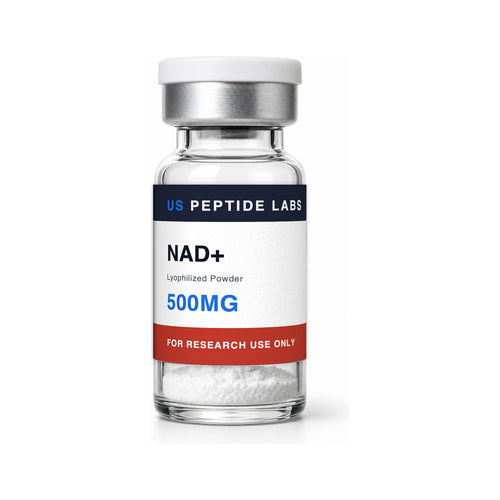
A freeze-dried vial. Store the powder in the fridge or freezer, and keep it in the fridge once mixed.

BPC-157 / TB-500 blend
Two peptides in one freeze-dried vial. The storage rules are the same as for a single peptide, with one label and one date to track.
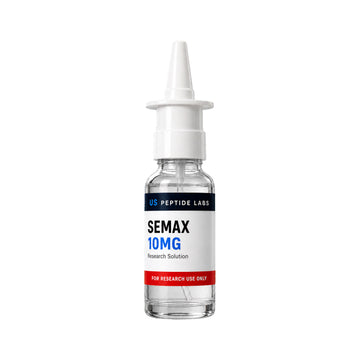
Semax Nasal Spray
A pre-mixed 15 mL spray. No reconstitution, so storage is simply the line on the label: cool, dark, capped.
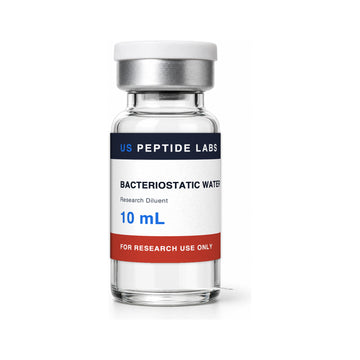
Bacteriostatic Water
Room temperature until opened. Date it at first puncture and replace it after 28 days, as covered in how long bacteriostatic water is good for after opening.
A simple storage routine
- On delivery, check the seal and match the lot number to its certificate.
- Put powder in the fridge or freezer, in the box.
- Before mixing, warm the vial to room temperature.
- After mixing, label with concentration and date and refrigerate.
- Each use: clean stopper, new syringe, back in the fridge straight away.
- At four weeks, or at the first sign of cloudiness, discard and start a new vial.
If you want to check what a vial contained before it went into storage, our guide on how to read a peptide COA explains each line of the report.
Sources
- Manning MC, et al. Stability of protein pharmaceuticals: an update. Pharmaceutical Research, 2010.
- Carpenter JF, et al. Rational design of stable lyophilized protein formulations: some practical advice. Pharmaceutical Research, 1997.
- Centers for Disease Control and Prevention. Pink Book, Chapter 5: Vaccine Storage and Handling.
- Wikipedia. Deamidation.
- Wikipedia. Cold chain.
Shop Research Peptides
American-made research peptides with an independent lab certificate for every lot.
Frequently asked questions
Do peptides need to be refrigerated?
Freeze-dried powder should be refrigerated or frozen for storage, though it handles room temperature during shipping. Once a vial is reconstituted it must stay in the fridge.
How long do peptides last in the fridge?
Unopened freeze-dried powder lasts until the expiry date printed on the vial when kept cold and dry. A reconstituted vial is best used within about four weeks.
Can you freeze peptides?
You can freeze unopened freeze-dried powder at minus 20 degrees Celsius for long-term storage. Do not freeze a vial after it has been mixed with water.
How long do reconstituted peptides last?
About four weeks in the fridge at 2 to 8 degrees Celsius is the usual working window. Discard the vial sooner if the liquid turns cloudy or changes color.
Do peptides expire?
Yes. The expiry date is stamped on the base of the vial or bottle beside the lot number. Past that date, or once a mixed vial is more than about four weeks old, the material should be replaced.
Can peptides be left out overnight?
Powder left out overnight is very likely fine. A mixed vial left out overnight has lost part of its working life, and the cautious choice is to replace it.
Why did my order arrive at room temperature?
Freeze-dried peptides are stable at room temperature for the time shipping takes, so no ice pack is needed. Store the vial cold once it arrives.
Where in the fridge should peptides go?
At the back of a middle shelf, in their box. Avoid the door, where the temperature changes every time it is opened, and avoid spots right next to the cooling element where things can freeze.
How should nasal sprays be stored?
Follow the storage line on the bottle. In general keep sprays cool, dark, upright and capped, and never freeze them.
How can I tell if a peptide has gone bad?
Look for cloudiness, particles, a color change or powder that has turned sticky. Any of these means the vial should be discarded.
For research use only. Not for human consumption. These statements have not been evaluated by the Food and Drug Administration. Products sold by US Peptide Labs are not intended to diagnose, treat, cure or prevent any disease.
Last reviewed November 16, 2026. We review each guide every one to two months and update the date when the text changes.