Product Guides/Reconstitution
How to Reconstitute Peptides: Step-by-Step Lab Guide
Quick answer
To reconstitute a peptide, let the vial reach room temperature, wipe both stoppers with alcohol, run bacteriostatic water slowly down the inside wall of the vial and swirl gently until the liquid is clear. Never shake it. Write the concentration and the date on the label, then keep the mixed vial in the fridge at 2 to 8 degrees Celsius.
- Warm the vial and the water to room temperature.
- Clean both rubber stoppers and let them dry.
- Add the water down the glass wall, not onto the powder.
- Swirl, wait, label and refrigerate.
Key takeaways
- Diluent: bacteriostatic water with 0.9 percent benzyl alcohol is the standard choice for a vial you will draw from more than once.
- Math: milligrams of peptide divided by milliliters of water gives the concentration in mg per mL.
- Technique: slow water, gentle swirl, no shaking. Foam and bubbles are a sign of rough handling.
- Cloudy vial: usually cold liquid or powder that has not finished dissolving. Give it time before you worry.
- After mixing: fridge only, never the freezer, and plan to use the vial within about four weeks.
Almost every research peptide ships as a dry powder, so reconstitution is the first thing a lab does with a new vial. It is also the step where most mistakes happen. This guide walks through the full process for the healing and recovery peptides and other freeze-dried vials in our catalog, then covers the problems people run into: cloudy liquid, powder that will not dissolve, foam and the wrong amount of water.
Everything here describes laboratory handling of research materials. Our products are sold for research use only, and this guide does not cover use in people. If you only need the short version, the answer page on how you reconstitute peptides has it in a few lines.
What reconstitution means and why peptides ship dry
Reconstitution is the act of turning a freeze-dried powder back into a liquid by adding a measured amount of sterile diluent. Peptides are sold dry because water is what breaks them down. The powder in your vial was made by freeze drying, a process that freezes the solution and then pulls the ice out under vacuum. What is left is a light cake or a thin film that stays stable for a long time.
The moment water goes back in, that protection ends. From then on the peptide slowly degrades, which is why a mixed vial lives in the fridge and has a short working life. Our guide on how to store peptides covers that side in detail.
What you need before you start
Lay everything out first. Stopping halfway to look for a swab is how stoppers get touched and vials get knocked over.
| Item | What it is for | Notes |
|---|---|---|
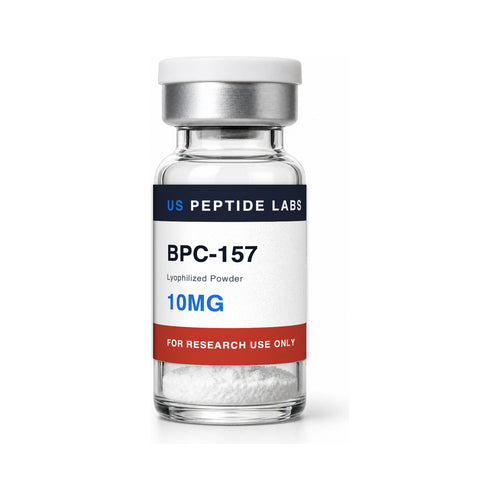
| Freeze-dried peptide vial | The research material | Check the seal and the lot number on the base. Compare a single vial such as BPC-157 with a blend before you plan volumes. |
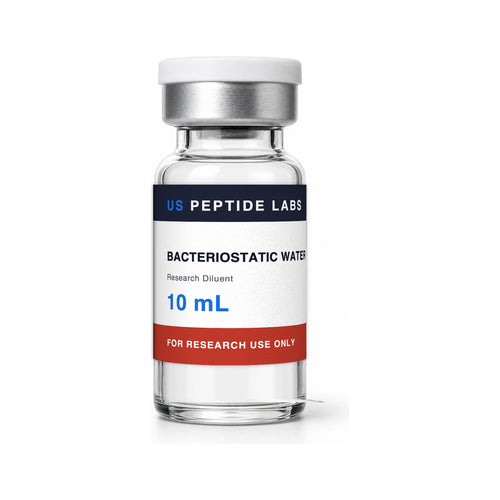
| Bacteriostatic water | The diluent | Sterile water with 0.9 percent benzyl alcohol. A 10 mL vial covers several reconstitutions. |
| Alcohol swabs | Cleaning both stoppers | Use a fresh swab for each vial and let the stopper dry. |
| Sterile syringe | Measuring and moving the water | New and sealed. One syringe per transfer. |
| Label or marker | Recording concentration and date | An unlabeled mixed vial is the most common lab mistake. |
| Lot certificate | Confirming what is in the vial | Every lot is listed on our certificates of analysis page. |
Work out the concentration first
Decide how much water you will add before you open anything. The formula is short: milligrams of peptide divided by milliliters of water equals milligrams per milliliter.
| Peptide in vial | 1 mL of water | 2 mL of water | 5 mL of water |
|---|---|---|---|
| 5 mg | 5 mg/mL | 2.5 mg/mL | 1 mg/mL |
| 10 mg, for example BPC-157 10 mg | 10 mg/mL | 5 mg/mL | 2 mg/mL |
| 30 mg blend | 30 mg/mL | 15 mg/mL | 6 mg/mL |
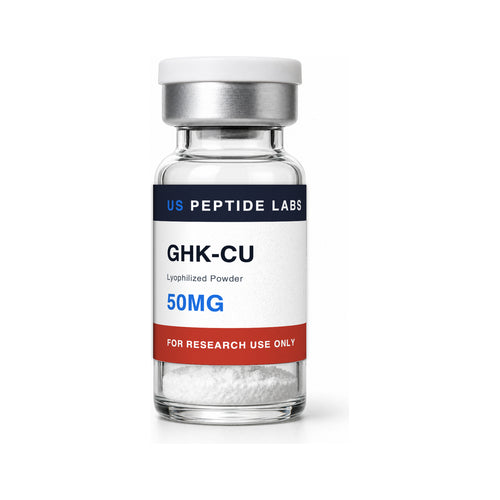
| 50 mg, for example GHK-Cu 50 mg | 50 mg/mL | 25 mg/mL | 10 mg/mL |
More water gives a weaker solution that is easier to measure in small amounts. Less water keeps the volume low but leaves less room for error. Round numbers make the math harder to get wrong. There are more worked examples in how much bacteriostatic water to add.
Step-by-step: how to reconstitute a peptide vial
Step 1: Let the vial and the water warm up
Take the peptide and the water out of cold storage and leave them on the bench for 15 to 20 minutes. A cold vial pulls moisture out of the air when it is opened, and cold water dissolves powder more slowly. Do not use heat to speed this up.
Step 2: Clean your hands, the surface and both stoppers
Wash your hands and wipe the work surface. Flip the plastic caps off both vials, wipe each rubber stopper with its own alcohol swab and let them air dry. The CDC guidance on preventing unsafe injection practices is written for clinics, but the same rule applies on a lab bench: disinfect the stopper before every entry and use a new sterile needle and syringe each time.
Step 3: Draw the water
Draw the volume you planned from the bacteriostatic water vial. Check the amount at eye level. If there are large air bubbles in the syringe, tap them to the top and push them out before you measure.
Step 4: Add the water slowly, down the glass
Push the needle through the stopper of the peptide vial at a slight angle so the tip points at the glass wall. Let the water run down the inside of the vial. Do not aim the stream at the powder. Many vials are sealed under vacuum and will pull the water in on their own, so keep a light hold on the plunger and let it go slowly.
Step 5: Swirl, then wait
Roll the vial gently between your fingers or tilt it in slow circles. Then put it down and give it a few minutes. Most peptides clear within one to five minutes. Larger amounts and some blends take longer.
Step 6: Check, label and refrigerate
Hold the vial up to the light. The liquid should be clear with nothing floating in it. Write the concentration and the date on the label and put the vial in the fridge at 2 to 8 degrees Celsius. Do not freeze a mixed vial.
- 1Warm up
- 2Clean stoppers
- 3Draw water
- 4Add down the glass
- 5Swirl and wait
- 6Label and chill
Why is my peptide cloudy? Troubleshooting
A vial that does not look right is the most common reason people search for this topic. Most of the time the cause is simple and the fix is patience.
| What you see | Likely cause | What to do |
|---|---|---|
| Cloudy right after adding water | Powder still dissolving, or cold liquid | Swirl gently, wait 10 to 15 minutes at room temperature |
| Small clear gel-like bits | Powder that got wet too fast and clumped | Leave it in the fridge for a few hours, swirl now and then |
| Foam or many bubbles | Water added too fast, or shaking | Let it stand until the foam settles. Do not shake again |
| Blue liquid | Normal for copper peptides | Nothing. See why GHK-Cu is blue |
| Still cloudy after 24 hours in the fridge | Too concentrated, or the peptide has aggregated | Do not use it. Check the amount on the label against your water volume |
| Particles, strings or a color change days later | Contamination or breakdown | Discard the vial |
Powder that will not dissolve
Some peptides are slower than others, and a large amount in a small volume is the usual reason. If you used very little water for a 50 mg vial, the solution may be close to its limit. Give it time in the fridge before deciding anything. Heating the vial or shaking it harder will not help and can ruin the material.
Powder stuck to the stopper or the wall
Freeze-dried cake sometimes breaks loose in shipping and sticks to the stopper. That is cosmetic. Tilt the vial so the liquid reaches the powder and swirl. Do not open the vial to scrape it down.
The vial did not pull the water in
Not every vial holds a strong vacuum, and a weak pull does not mean the vial is bad. Push the plunger slowly and let the water run down the glass as usual.
Bacteriostatic water, sterile water or something else
The diluent matters as much as the technique. The FDA label for Bacteriostatic Water for Injection, USP describes it as sterile water with 0.9 percent benzyl alcohol added as a preservative, supplied in a multiple-dose container so that repeated withdrawals can be made.
| Diluent | Preservative | Good for | Not good for |
|---|---|---|---|
| Bacteriostatic water | 0.9 percent benzyl alcohol | Vials you will go back to over days or weeks | Anything the label says must use another diluent |
| Sterile water | None | Single use on the same day | Repeated entry into the same vial |
| Tap, bottled or distilled water | None, not sterile | Nothing | Any peptide work. See why tap and distilled water are ruled out |
An opened vial of bacteriostatic water has its own clock. The usual rule for multi-dose vials is to date them at first puncture and discard them 28 days later unless the maker states otherwise.
Reconstituting a blend
A blend is two or more peptides freeze-dried together in one vial. The process is the same, but the math changes: the label shows the amount of each peptide, and each one ends up at its own concentration. A 10 mg and 10 mg blend mixed with 2 mL of water gives 5 mg/mL of each peptide, 10 mg/mL in total.
Blends also tend to dissolve a little more slowly because there is more solid in the vial. Our guide to peptide stacks and blends compares a pre-mixed vial with two single vials.
Products this guide applies to
Bacteriostatic Water
The standard diluent for every freeze-dried vial we sell. Each 10 mL multi-dose vial contains sterile water with 0.9 percent benzyl alcohol.
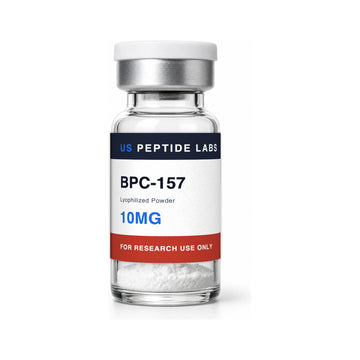
BPC-157
A 15 amino acid research peptide and one of the most common first vials. It dissolves quickly and gives a clear, colorless solution.
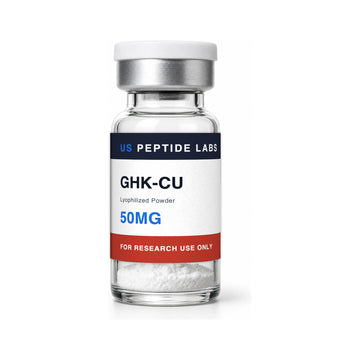
GHK-Cu
A copper peptide that turns the solution blue. The larger fill means it needs more water than a 10 mg vial to reach the same concentration.
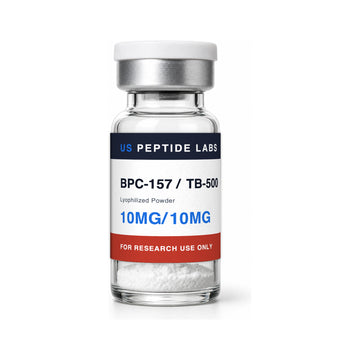
BPC-157 / TB-500 blend
Two peptides in one vial, so one reconstitution instead of two. Remember that each peptide has its own concentration after mixing.
After reconstitution: storage and shelf life
A mixed vial belongs in the fridge, upright, in its box or another dark place. A 2023 review, Designing Formulation Strategies for Enhanced Stability of Therapeutic Peptides in Aqueous Solutions (Nugrahadi et al., Pharmaceutics), explains why peptides in water are far less stable than the same peptides as a dry powder: once dissolved they are open to hydrolysis, oxidation and clumping.
- Keep it at 2 to 8 degrees Celsius. Do not freeze it.
- Plan to use it within about four weeks.
- Wipe the stopper before every entry and use a new sterile syringe each time.
- If the liquid turns cloudy or changes color later on, discard it.
If the mixing step is not something your project needs, pre-mixed formats skip it entirely. See peptide nasal spray vs oral spray vs vial for how the formats compare, or browse the research nasal sprays.
Sources
- Zapadka KL, et al. Factors affecting the physical stability (aggregation) of peptide therapeutics. Interface Focus, 2017.
- Nugrahadi PP, et al. Designing Formulation Strategies for Enhanced Stability of Therapeutic Peptides in Aqueous Solutions: A Review. Pharmaceutics, 2023.
- National Library of Medicine, DailyMed. Bacteriostatic Water for Injection, USP label.
- Centers for Disease Control and Prevention. Preventing Unsafe Injection Practices.
- Wikipedia. Freeze drying.
Shop Research Peptide Vials
American-made research peptides with an independent lab certificate for every lot.
Frequently asked questions
What do you mix peptides with?
Freeze-dried research peptides are mixed with bacteriostatic water, which is sterile water with 0.9 percent benzyl alcohol. The preservative is what makes it suitable for a vial that will be entered more than once.
How much water do I add to a 10 mg peptide vial?
It depends on the concentration you want. 1 mL gives 10 mg/mL, 2 mL gives 5 mg/mL and 5 mL gives 2 mg/mL. Most labs use 1 to 3 mL for a 10 mg vial because round numbers are easier to work with.
Why is my peptide cloudy after mixing?
Usually because the powder has not finished dissolving or the liquid is still cold. Swirl gently and wait 10 to 15 minutes. If the vial is still cloudy after a day in the fridge, do not use it.
Can you shake a peptide vial?
No. Shaking causes foam and adds stress that can make peptides clump. Roll or swirl the vial slowly and let it stand.
How long does it take a peptide to dissolve?
Most dissolve in one to five minutes with gentle swirling. Larger fills and blends can take 15 minutes or more. A few stubborn gel-like bits often clear after a few hours in the fridge.
Do you put reconstituted peptides in the fridge?
Yes. Once water is added the vial is stored at 2 to 8 degrees Celsius and should not be frozen. Plan to use it within about four weeks.
Can I use sterile water instead of bacteriostatic water?
Sterile water has no preservative, so it only suits a vial that will be used once on the same day. For a vial you will return to, bacteriostatic water is the standard.
Does it matter if the vial has no vacuum?
No. Vacuum strength varies from vial to vial and a weak pull is not a quality problem. Add the water slowly by hand and let it run down the glass.
Why should water run down the side of the vial?
A direct stream breaks up the freeze-dried cake too hard and makes foam. Running the water down the glass wets the powder gently so it dissolves evenly.
How do I know what is in my vial before I mix it?
Match the lot number stamped on the base of the vial to the certificate of analysis for that lot. The report shows the identity and purity of the material from an independent lab.
For research use only. Not for human consumption. These statements have not been evaluated by the Food and Drug Administration. Products sold by US Peptide Labs are not intended to diagnose, treat, cure or prevent any disease.
Last reviewed November 16, 2026. We review each guide every one to two months and update the date when the text changes.