Product Guides/Lab Testing
How to Read a Peptide COA: Purity, Mass and Lot Number
Quick answer
To read a peptide COA, first match the lot number on the report to the number stamped on your vial, then check three results: HPLC purity of 98 percent or higher, a mass spectrometry result that matches the expected molecular weight, and the name of the independent lab that ran the tests. If any of those is missing, or the lot numbers do not match, the certificate does not prove anything about the vial in your hand.
- Match the lot number.
- Check HPLC purity.
- Check the mass against the expected weight.
- Check who tested it and when.
Key takeaways
- COA: a certificate of analysis is a lab report for one specific lot, not for a product in general.
- Purity: the HPLC number tells you how much of the sample is the target peptide.
- Identity: mass spectrometry tells you it is the right molecule.
- Independence: a third-party lab report carries more weight than a seller's own sheet.
- Access: every label we ship has a QR code that opens the certificates for that product.
A certificate of analysis is the only real evidence of what is inside a vial. Anyone can print 99 percent on a label. A COA shows the test, the result, the lot and the lab. This guide explains each part of the report in plain terms, using the certificates published for our research peptides as the example, so you can read any supplier's document and spot the weak ones.
You can open ours at any time on the certificates of analysis page. Each certificate has a US Peptide Labs cover sheet followed by the laboratory's original, unaltered report.
What a COA is and why it matters
A certificate of analysis is a document from a laboratory confirming that a specific batch of material was tested and what the results were. The key word is batch. A peptide is made in lots, and each lot can differ. A report for one lot says nothing about the next one.
For research peptides this matters more than for most products. Synthesis can leave behind shortened chains, chains with a missing amino acid and other close relatives of the target molecule. The review Related impurities in peptide medicines (D'Hondt et al., Journal of Pharmaceutical and Biomedical Analysis, 2014) catalogs how these arise during manufacturing and storage. They cannot be seen. Only testing shows them.

How to find the COA for your vial
Step 1: Scan the QR code or open the product page
Every vial, nasal spray and oral spray label has a QR code. It opens the list of certificates on file for that exact product, with no login. The same list is on each product page under Certificate of Analysis.
Step 2: Find the lot number on the base
Turn the vial or bottle over. The lot number is stamped on the base beside the manufacture and expiry dates.
Step 3: Match it to the list
Each product lists every lot on file. Find the row with the lot number in your hand. That row is the certificate for your material.
Step 4: Open the report and read it
The rest of this guide covers what you will see.
- 1Scan the QR code
- 2Read the lot number on the base
- 3Find that lot in the list
- 4Open the lab report
The parts of a peptide COA
| Section | What it shows | What to look for |
|---|---|---|
| Header | Lab name, report number, date | An independent lab, a recent date |
| Sample details | Compound name, lot number, stated amount | Lot number matches your vial, name matches the label |
| HPLC purity | Share of the sample that is the target peptide | 98 percent or higher |
| Mass spectrometry | Measured molecular weight | Matches the expected weight for the compound |
| Quantity or content | How much peptide is in the vial | At or close to the amount on the label |
| Other tests, when run | Endotoxin, sterility, heavy metals | Results stated with a method and a limit |
| Chromatogram and spectrum | The raw graphs behind the numbers | One large peak, small side peaks |
How to read the HPLC purity result
HPLC stands for high-performance liquid chromatography. The sample is pushed through a column that separates its parts by how strongly they stick to the column material. Each part comes out at a different time and shows up as a peak on a graph.
- The big peak is the target peptide.
- The small peaks are everything else in the sample.
- Purity is the area of the big peak as a share of all peak areas.
For research peptides, 98 percent or higher is the usual benchmark. We go into the number for one product in what purity BPC-157 / TB-500 should have.
How to read the mass spectrometry result
Mass spectrometry weighs molecules. Every peptide has an expected molecular weight set by its amino acid sequence, and the measured value should match it closely. HPLC tells you the sample is mostly one thing. Mass spectrometry tells you that one thing is the right molecule.
| Compound | What the report should confirm | Read more |
|---|---|---|
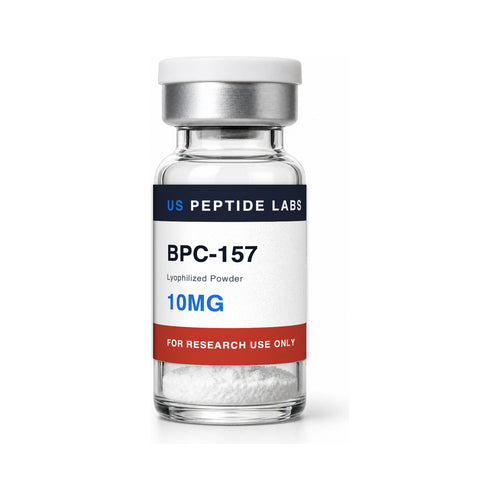
| BPC-157 | A mass of about 1419 daltons | What BPC-157 is |
| BPC-157 / TB-500 blend | Both peptides identified separately in the same lot | Blend vs two vials |
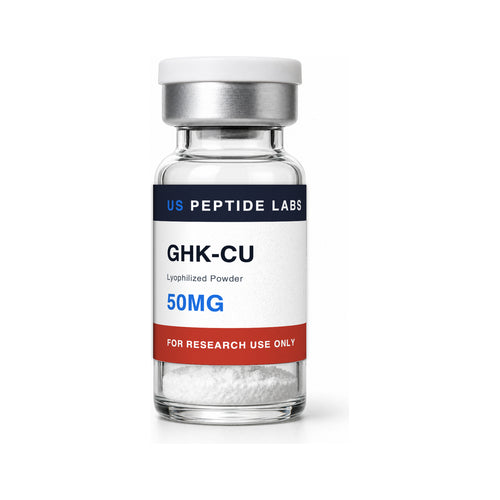
| GHK-Cu | The expected mass as stated on the report, for the peptide with or without copper | What GHK-Cu is |
| GLP-3RT | The expected mass for the full sequence | What GLP-3RT is |
Spectra often show the molecule carrying two or three charges, so you may see peaks at a half or a third of the full weight. That is normal. The report states the calculated mass so you do not have to work it out.
Other tests you may see
Endotoxin
Endotoxins are fragments of bacterial cell walls that can remain even after bacteria are gone. The standard check is the limulus amebocyte lysate test, usually written LAL, with the result in endotoxin units.
Sterility and heavy metals
Some reports include a sterility test and a screen for metals such as lead, arsenic, cadmium and mercury. When they appear, each should state a method and a pass limit.
Water and counter-ion content
Freeze-dried peptide powder is never 100 percent peptide by weight. It holds a little water and the salt form left from purification. A detailed report may list these, which explains why the net peptide content can be lower than the gross powder weight.
Red flags on a certificate
| Red flag | Why it is a problem |
|---|---|
| No lot number, or one that does not match the vial | The report may be for different material |
| No lab name or report number | Nobody can verify who ran the test |
| Only a purity number, no chromatogram | The number cannot be checked against data |
| Purity but no mass spectrometry | Pure, but pure what? |
| The same report reused for many lots | Later lots were not tested |
| A date older than the lot's manufacture date | The test cannot have been run on that lot |
| Edited or cropped images | The lab's original report should be shown whole |
Regulators focus on the same things. The FDA's 2026 update on generic peptide products, revised draft product-specific guidances for certain generic peptide products, lists impurity thresholds among its main areas. Research materials are not approved drugs, but the reason is the same: with peptides, what else is in the vial matters.
What our certificates include
Every lot we receive is documented by an independent laboratory. Each certificate carries our cover sheet followed by the lab's original report, published as the lot is received. If a lot is not listed yet, send us the product name and lot number and we forward the report directly.
GLP-3RT
A triple agonist research compound. Its certificates are listed by lot on the product page.
BPC-157
A 15 amino acid peptide. On its lot report, look for the HPLC purity figure and a mass of about 1419 daltons.
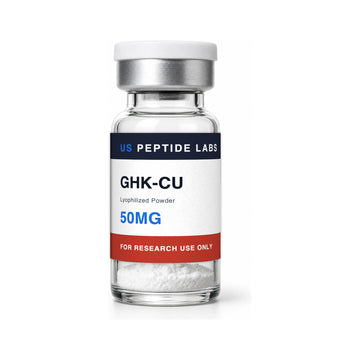
GHK-Cu
A copper peptide, so a blue powder and a blue solution are expected and are not a sign of a problem.
After you have read the COA
A good report tells you the vial was right when it was tested. Keeping it that way is down to handling. See how to store peptides for storage and how to reconstitute peptides for the mixing step. If you are comparing formats, peptide nasal spray vs oral spray vs vial covers the differences, and the healing and recovery category is a good place to see lot listings on live product pages.
Sources
- D'Hondt M, et al. Related impurities in peptide medicines. Journal of Pharmaceutical and Biomedical Analysis, 2014.
- U.S. Food and Drug Administration. FDA Publishes Revised Draft Product-Specific Guidances for Certain Generic Peptide Products, 2026.
- Wikipedia. Certificate of analysis.
- Wikipedia. High-performance liquid chromatography.
- Wikipedia. Mass spectrometry.
- Wikipedia. Limulus amebocyte lysate.
Shop Lab Tested Research Peptides
American-made research peptides with an independent lab certificate for every lot.
Frequently asked questions
What does COA stand for?
COA stands for certificate of analysis. It is a laboratory report showing the test results for one specific lot of material.
What purity should a research peptide have?
98 percent or higher by HPLC is the usual benchmark for research peptides.
What is the difference between purity and quantity?
Purity is the share of the peptide in the sample that is the target molecule. Quantity is how many milligrams are in the vial. A report should address both.
How do I know a COA belongs to my vial?
Match the lot number on the report to the lot number stamped on the base of your vial or bottle. If they differ, the report is for other material.
What does HPLC show?
HPLC separates the parts of a sample and shows them as peaks. The size of the main peak compared with all peaks gives the purity percentage.
What does mass spectrometry show?
It measures the molecular weight of the compound. A match with the expected weight confirms the identity of the peptide.
Is a third-party COA better than an in-house one?
Yes. An independent lab has no stake in the result, and its report can be traced by lab name and report number.
Where do I find the COA for a US Peptide Labs product?
Scan the QR code on the label or open the Certificate of Analysis panel on the product page, then find your lot number in the list.
What if my lot is not listed?
Certificates are published as each lot is received. Send us the product name and lot number and we will forward the report.
Does a COA guarantee the peptide is still good?
It shows the material met the stated results when tested. After that, quality depends on storage and handling, so follow the storage guidance for the format you have.
For research use only. Not for human consumption. These statements have not been evaluated by the Food and Drug Administration. Products sold by US Peptide Labs are not intended to diagnose, treat, cure or prevent any disease.
Last reviewed November 16, 2026. We review each guide every one to two months and update the date when the text changes.