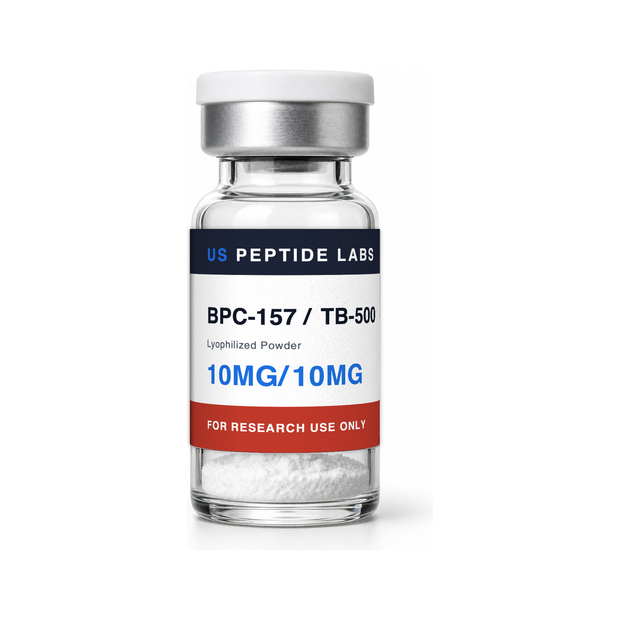
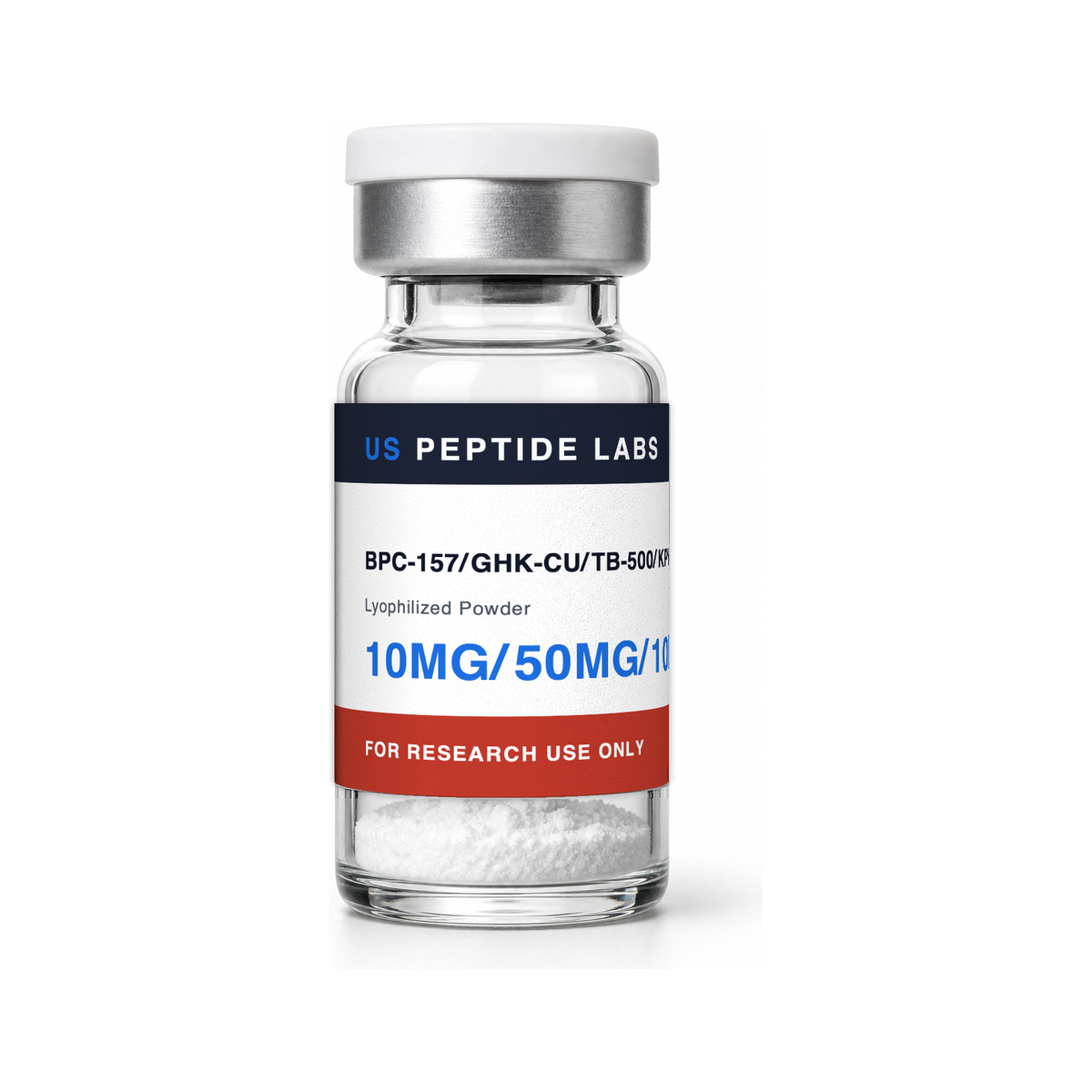
Vial products ship as dry lyophilized material unless the product format explicitly states otherwise.
10mL VialHealing & RecoveryPremium Blend
10mL Vial
KLOW (BPC-157 / GHK-Cu / TB-500 / KPV) Blend
Four-peptide elite recovery & repair matrix
$145.00
Volume pricing
Per-unit price drops automatically as quantity increases.
| Strength | 1 | 2+ | 5+ |
|---|---|---|---|
| Blend | $145.00 | $137.75 | $130.50 |
Per-unit pricing at each quantity break, applied automatically at checkout.
Four-peptide elite recovery & repair matrix
Lot documentation
Certificate of Analysis
Lot-specific laboratory documentation for this product is available on request.
Request this lot’s COAWhat the literature reports
This research blend combines BPC-157 and thymosin beta-4–related sequences; published work largely examines each peptide separately in injury and repair laboratory models.
-
In tendon fibroblast systems, BPC-157 increased outgrowth, survival, and migration—endpoints relevant to soft-tissue repair research.
-
In a rat muscle crush-injury model, BPC-157 improved functional and histologic healing indices after gastrocnemius contusion.
-
In post-infarct mice, thymosin beta-4 enhanced cardiomyocyte survival and cardiac repair measures, illustrating regenerative endpoints studied for the TB-4 pathway.
These summaries describe findings reported in published laboratory and clinical literature about this compound. They are provided for research context only. They are not claims about this product, and nothing here describes an intended use in humans or animals. This material is supplied strictly for laboratory research use.
Technical documentation
About KLOW (BPC-157 / GHK-Cu / TB-500 / KPV) Blend
Technical overview
BPC-157 / GHK-Cu / TB-500 / KPV Blend combines BPC-157, GHK-Cu, TB-500 and KPV. Each component is summarised below as it appears in the published literature.
BPC-157
synthetic gastric pentadecapeptide
BPC-157 is a 15-amino-acid peptide derived from a body-protection-compound sequence associated with gastric juice research. Most published work is preclinical, with animal models examining wound repair, tendon and ligament injury, gastrointestinal integrity, vascular responses, and nitric-oxide-system interactions. Human evidence is much thinner than internet discussion suggests.
Because the literature is dominated by rodent and other animal models, BPC-157 education needs careful framing. Research-grade BPC-157 is Research Use Only and is not an approved drug product. Reported ranges below reflect published animal-study exposure styles and should not be converted into human protocols.
GHK-Cu
Copper-binding tripeptide
GHK-Cu is the copper(II) complex of the tripeptide glycyl-L-histidyl-L-lysine. It appears in human plasma, saliva, and urine, and circulating levels are reported to decline with age. In research settings it is treated as a small signaling peptide that can shuttle copper into cells and influence gene programs tied to extracellular matrix turnover.
Investigators study GHK-Cu because multiple cell-culture and animal models link it to organized collagen and glycosaminoglycan synthesis, balanced matrix metalloproteinase activity, and support for angiogenesis during tissue remodeling. Reviews by Pickart and colleagues summarize effects across skin regeneration, wound models, and broader protective gene-expression patterns. Most human data involve topical cosmetic or dermatology formulations rather than large injectable trials.
For laboratory and research-use-only contexts, GHK-Cu is typically supplied as a lyophilized powder for reconstitution. Published work frames it as a reference compound for studying copper-dependent repair pathways, not as an approved systemic therapy for disease. Any dosage figures discussed on educational pages are literature-reported ranges for reference, not recommendations.
TB-500
Actin-binding repair peptide
TB-500 is a synthetic research peptide associated with the actin-binding region of thymosin beta-4 (Tβ4), a naturally occurring 43-amino-acid peptide abundant in platelets and wound fluid. In laboratory and preclinical models, Tβ4 and related fragments have been examined for roles in cell motility, angiogenesis, inflammation resolution, and extracellular-matrix organization after injury.
Researchers study TB-500 because full-length Tβ4 has a long experimental record in dermal wound models, cardiac injury paradigms, corneal repair work, and regenerative-biology reviews. The synthetic fragment is used as a more practical research tool when investigators want to probe actin-cytoskeleton and repair-associated signaling without working with the entire native protein.
All material discussed here is Research Use Only (RUO). It is not a drug product, not approved by the FDA for human use, and not intended for human consumption, clinical treatment, or diagnostic procedures. Published dosage figures below are literature or commonly cited research-protocol references, not recommendations.
KPV
Melanocortin-derived anti-inflammatory tripeptide
KPV is the carboxyl-terminal tripeptide (lysine-proline-valine) of alpha-melanocyte-stimulating hormone. Classical pharmacology work showed that this tiny fragment retains substantial anti-inflammatory activity associated with the parent hormone while avoiding much of the melanotropic baggage of full-length alpha-MSH.
Peer-reviewed studies have examined KPV in models of crystal-induced and cytokine-driven inflammation, keratinocyte signaling, and murine inflammatory bowel disease. Reviews of alpha-MSH-related peptides position KPV and related analogs as tool compounds for immunology and barrier-tissue research. Antimicrobial properties against selected organisms have also been explored in experimental systems.
Dosage education should emphasize that human standardized injectable regimens are not established the way they are for approved hormones. Ranges circulating in research-peptide communities are secondary references. This page uses research-use-only language and points readers to primary immunology papers for mechanism context.
Mechanism of action
BPC-157
BPC-157 is studied for interactions with cytoprotective pathways, angiogenesis-related signaling, nitric oxide balance, and tissue-response networks. Preclinical papers describe effects on vascular integrity, growth-factor expression, inflammatory responses, and gastrointestinal mucosal resilience. The exact receptor-level mechanism is not settled, and much of the evidence comes from model-specific injury systems. That uncertainty is why species, route, and endpoint matter so much in BPC-157 interpretation.
GHK-Cu
GHK binds Cu2+ with high affinity and can deliver bioavailable copper while acting as a signaling ligand. Reported cellular effects include modulation of TGF-beta and integrin-related pathways, upregulation of collagen, elastin, and proteoglycan synthesis, and coordinated control of MMPs and their inhibitors so matrix breakdown and rebuild stay balanced. Antioxidant and anti-inflammatory actions are also described, including support for superoxide dismutase activity and reductions in selected pro-inflammatory cytokines in experimental systems. Together these actions position GHK-Cu as a remodeler of the extracellular matrix rather than a simple structural filler.
TB-500
Thymosin beta-4 sequesters G-actin and helps regulate actin polymerization, which influences cytoskeletal remodeling and cell migration. Related domains have been linked in the literature to pro-angiogenic signaling, reduced inflammatory tone at injury sites, and shifts in fibrosis-related cell phenotypes. TB-500 is studied as a compact surrogate for key actin-binding and repair-associated activities of the parent peptide, though fragment-versus-full-length differences remain an active research question.
KPV
KPV modulates inflammatory signaling with evidence for both melanocortin-related and receptor-independent actions in different experimental setups. Reported effects include reduced pro-inflammatory cytokine tone and interference with NF-kB-linked transcriptional programs in immune and epithelial cells. Because pigmentary MC1R-driven melanogenesis is largely dissociated from KPV's anti-inflammatory profile, researchers value it as a stripped-down probe of alpha-MSH immunomodulation. Barrier tissues—skin and gut mucosa—are recurring experimental contexts.
Research applications
- wound healing models
- tendon and ligament research
- gastrointestinal integrity
- angiogenesis signaling
- nitric oxide pathways
- skin remodeling
- wound healing
- extracellular matrix biology
- collagen synthesis
- anti-inflammatory signaling
- angiogenesis
- tissue repair and wound models
- cell migration and actin dynamics
- cardiac injury models
- anti-fibrotic and inflammation-resolution pathways
- anti-inflammatory pharmacology
- inflammatory bowel disease models
- dermatologic inflammation
- innate immune modulation
- host-defense peptide research
Fields of active investigation, not claims. Investigation is not proof.
BPC-157 is studied mainly by preclinical pharmacology groups, gastrointestinal researchers, sports-medicine reviewers, and analytical laboratories. Human clinical researchers generally treat the evidence base as preliminary and not interchangeable with approved peptide therapeutics.
Dermatology and wound-healing researchers use GHK-Cu to probe copper-dependent matrix remodeling and fibroblast behavior. Cosmetic scientists evaluate topical formulations for photoaging and barrier metrics. Regenerative-biology labs study its gene-expression footprint in repair models. Interest is strongest among groups working on tissue architecture, not general endocrinology.
Interest is highest among regenerative-biology, sports-medicine research, and wound-healing laboratories that model soft-tissue injury, angiogenesis, or cytoskeletal control of repair. Comparative work also appears in cardiac and corneal injury literature focused on Tβ4 biology rather than TB-500 as a clinical agent.
Immunologists and gastroenterology labs use KPV in colitis and peritonitis models. Dermatology researchers examine keratinocyte and skin inflammation pathways. Peptide chemists compare KPV with related analogs such as KdPT. The audience is inflammation-biology focused rather than metabolic-obesity focused.
Amounts reported in the literature
What published research and laboratory protocols document. These describe what was studied — they are not instructions, recommendations, or a protocol for use.
| Component | Reported amount | Frequency | Route | Research context |
|---|---|---|---|---|
| BPC-157 | 0.01 mcg – 10 mcg | varies by animal model | intraperitoneal, oral, topical, or local in animal studies | Preclinical BPC-157 animal studies frequently report ng/kg to mcg/kg exposure bands |
| BPC-157 | 10 mcg | model-dependent | animal-study routes vary | Rodent injury and gastrointestinal models often cite 10 mcg/kg as an experimental exposure |
| GHK-Cu | 500 mcg – 2 mg | daily | subcutaneous | Commonly cited in research and compounding reference protocols for subcutaneous investigation |
| GHK-Cu | no single figure reported | 1-2 times daily | topical | Topical dermatology and cosmetic research formulations |
| TB-500 | 2 mg – 5 mg | twice weekly | subcutaneous | Commonly cited in research-protocol summaries for synthetic TB-500 |
| TB-500 | 2 mg – 2.5 mg | once weekly | subcutaneous | Maintenance-style ranges reported in research-community protocols |
| TB-500 | 42 mg – 1260 mg | single or daily multi-dose cohorts | intravenous | Human intravenous Tβ4 safety study (full-length peptide, not TB-500 fragment) |
| KPV | 200 mcg – 500 mcg | daily | subcutaneous | Commonly cited secondary research-protocol ranges for subcutaneous KPV |
| KPV | no single figure reported | study-defined | model-dependent | Experimental IBD and inflammation models (route varies: oral, i.p., or other study-defined routes) |
Handling and storage
BPC-157
Lyophilized BPC-157 is commonly stored frozen or refrigerated, dry, and protected from light; reconstituted research solutions are usually refrigerated and handled aseptically.
GHK-Cu
Keep lyophilized vials refrigerated or frozen per supplier COA, protected from light and moisture. After reconstitution with bacteriostatic water, refrigerate and use within the stability window stated by the supplier, commonly cited as up to 30 days when kept cold and uncontaminated.
TB-500
Keep lyophilized vials refrigerated or frozen, protected from light and moisture. After reconstitution with bacteriostatic water, refrigerate and use within the timeframe specified by the laboratory protocol, typically days to a few weeks.
KPV
Keep lyophilized KPV cold, dry, and protected from light. Reconstitute with bacteriostatic water under clean technique, refrigerate, and use within supplier stability guidance for small peptides.
Notes on combined research
BPC-157
BPC-157 is commonly paired in online discussion with TB-500, GHK-Cu, or recovery-focused compounds, but those combinations outrun the human evidence. Research protocols should isolate injury model, route, and endpoint before combining peptides, especially when the base evidence is preclinical.
GHK-Cu
In research catalogs GHK-Cu often appears alongside BPC-157 and TB-500/thymosin beta-4 in multi-peptide repair blends (for example Glow or Klow) because the components target complementary matrix, angiogenic, and inflammatory pathways. It is also studied next to topical retinoids or growth-factor serums in dermatology work. Stacking discussions should stay per-component: each peptide has its own concentration math.
TB-500
In research discussions, TB-500 is frequently examined alongside BPC-157 because both appear in soft-tissue repair literature, though through different proposed pathways. Some protocols also pair actin-repair work with growth-hormone secretagogue or GHRH-analog models when the experimental question involves recovery physiology rather than a single molecular target.
KPV
KPV is the component that distinguishes Klow from Glow when added to GHK-Cu + BPC-157 + TB-500. Researchers also examine it conceptually alongside other barrier-focused agents. Combination products still require independent dose math for KPV content.
Analytical specifications
| Format | 10mL Vial |
|---|---|
| Physical form | Lyophilized powder |
| Also referred to as | Body Protection Compound 157, PL 14736, stable gastric pentadecapeptide BPC 157, Copper Peptide, GHK-Copper, Copper tripeptide-1, Glycyl-L-histidyl-L-lysine copper, Thymosin Beta-4 fragment, Tβ4 fragment, LKKTETQ motif peptide, Lys-Pro-Val, alpha-MSH (11-13), MSH 11-13 |
| Reported half-life | BPC-157: Not well established for human use; published discussions emphasize stability in gastric-juice-related contexts and model-specific exposure rather than a clinical half-life. — GHK-Cu: Short systemic half-life reported for the free peptide (on the order of minutes to about an hour in secondary sources); topical residence depends on vehicle — TB-500: ~2-3 hours reported for related Tβ4 biology; tissue effects may outlast plasma half-life — KPV: Short (small tripeptide; rapid clearance expected; exact human injectable PK sparsely published) |
Identity and purity are documented per lot on the Certificate of Analysis for the material you receive. Lot, manufacture and expiry are stamped on the base of the vial or bottle.
Frequently asked questions
BPC-157: what is the dosage for BPC-157
Published BPC-157 research is mostly animal work, often reported as ng/kg or mcg/kg. Those values are reference information and are not human dosing instructions.
GHK-Cu: What is the dosage for GHK-Cu peptide?
There is no single universal clinical dose for research-grade GHK-Cu injectables. Secondary research-protocol summaries commonly cite roughly 500-2,000 mcg (0.5-2 mg) subcutaneously per day, while topical work uses percent-strength creams rather than mcg injections. Treat published figures as reference ranges from literature and lab practice, not personal medical advice. Use a reconstitution calculator to convert vial milligrams and diluent volume into mcg per unit.
TB-500: What is TB-500 peptide dosage in research contexts?
Secondary research summaries most often cite about 2,000-5,000 mcg twice weekly during higher-intensity phases, with lower once-weekly amounts afterward. These are reference figures from protocol literature, not medical advice.
KPV: What is the dosage for KPV peptide?
Secondary research protocols commonly discuss roughly 200-500 mcg subcutaneously per day, but this is not a standardized approved regimen. Primary literature doses are model-specific. Use those papers for scientific work and treat community charts as provisional.
BPC-157: how much bacteriostatic water for BPC-157
Common research examples use 1-3 mL for 5-10 mg vials. Reconstitution volume changes concentration only.
GHK-Cu: How much bac water for GHK-Cu?
Common research vial sizes are 50 mg or 100 mg. Adding 3 mL or 5 mL of bacteriostatic water are frequent choices because they yield easy insulin-syringe math. Example: 50 mg in 5 mL gives 10 mg/mL, so 0.1 mL (10 units on a U-100 syringe) equals 1,000 mcg. Always confirm your vial label and calculate from actual mg and mL.
TB-500: Is TB-500 the same as thymosin beta-4?
Not exactly. TB-500 is a synthetic peptide related to the actin-binding region of thymosin beta-4. Full-length Tβ4 is the native 43-amino-acid peptide used in many primary papers.
KPV: How much bac water for KPV?
A 10 mg vial with 2 mL bac water yields 5 mg/mL (5,000 mcg/mL), so 0.05 mL delivers 250 mcg. Smaller peptides are easy to over-concentrate; pick a diluent volume that makes your target mcg land on whole insulin units.
References
Every reference below resolves to an indexed paper. We would rather cite less and cite accurately.
- Stable Gastric Pentadecapeptide BPC 157 and Wound Healing.
- Stable gastric pentadecapeptide BPC 157: novel therapy in gastrointestinal tract.
- Stable gastric pentadecapeptide BPC 157-NO-system relation.
- GHK Peptide as a Natural Modulator of Multiple Cellular Pathways in Skin Regeneration.
- The human tri-peptide GHK and tissue remodeling.
- Regenerative and Protective Actions of the GHK-Cu Peptide in the Light of the New Gene Data.
- Stimulation of collagen synthesis in fibroblast cultures by the tripeptide-copper complex glycyl-L-histidyl-L-lysine-Cu2+.
- Thymosin β4: a multi-functional regenerative peptide. Basic properties and clinical applications.
- Thymosin beta4 accelerates wound healing.
- Animal studies with thymosin beta, a multifunctional tissue repair and regeneration peptide.
- The regenerative peptide thymosin β4 accelerates the rate of dermal healing in preclinical animal models and in patients.
- A randomized, placebo-controlled, single and multiple dose study of intravenous thymosin beta4 in healthy volunteers.
- Dissection of the anti-inflammatory effect of the core and C-terminal (KPV) alpha-melanocyte-stimulating hormone peptides.
- alpha-MSH related peptides: a new class of anti-inflammatory and immunomodulating drugs.
- Melanocortin-derived tripeptide KPV has anti-inflammatory potential in murine models of inflammatory bowel disease.
- alpha-Melanocyte-stimulating hormone, MSH 11-13 KPV and adrenocorticotropic hormone signalling in human keratinocyte cells.
Research use only
For laboratory and research purposes only. Not for human consumption, veterinary use, or medical applications. This product is not a drug, food, supplement or cosmetic, is not approved by the FDA, and is not intended to diagnose, treat, cure or prevent any disease. This page summarises published scientific literature; it is not medical advice and not a recommendation to use this compound. All handling must be performed by qualified personnel in a controlled laboratory environment.
Made in America. Documented lot by lot.
Most peptides sold in this category are imported in bulk, repackaged, and sold with no paperwork attached to the material in the bottle. Ours are synthesized in United States laboratories and every lot carries its own certificate.
Where is this material made?+
In United States laboratories. We buy from domestic synthesis rather than importing finished bulk from an overseas supplier and relabeling it. That is the reason we are able to name a specific laboratory, lot and test date for what you receive.
Why does a US laboratory matter?+
A domestic supply chain is shorter and documented end to end: identifiable facilities operating under US laboratory practice, and paperwork that follows one specific lot instead of a generic product description. It also means shorter transit and no repackaging between the laboratory and the customer.
What documentation comes with a lot?
A lot-specific Certificate of Analysis from an independent laboratory. The lot number is stamped on the base of the container — match it against the certificates listed on this page, or scan the QR code on the label, to open the report for the exact material shipped.
Where does my order ship from?+
Our United States facility, packed and dispatched domestically with tracking. Orders do not transit customs or get repackaged en route.
Pairs well with.
Research Peptide
VIP
VIP supplied as lyophilized powder in a 10 mL vial for laboratory research use only. Each lo...
$80.00