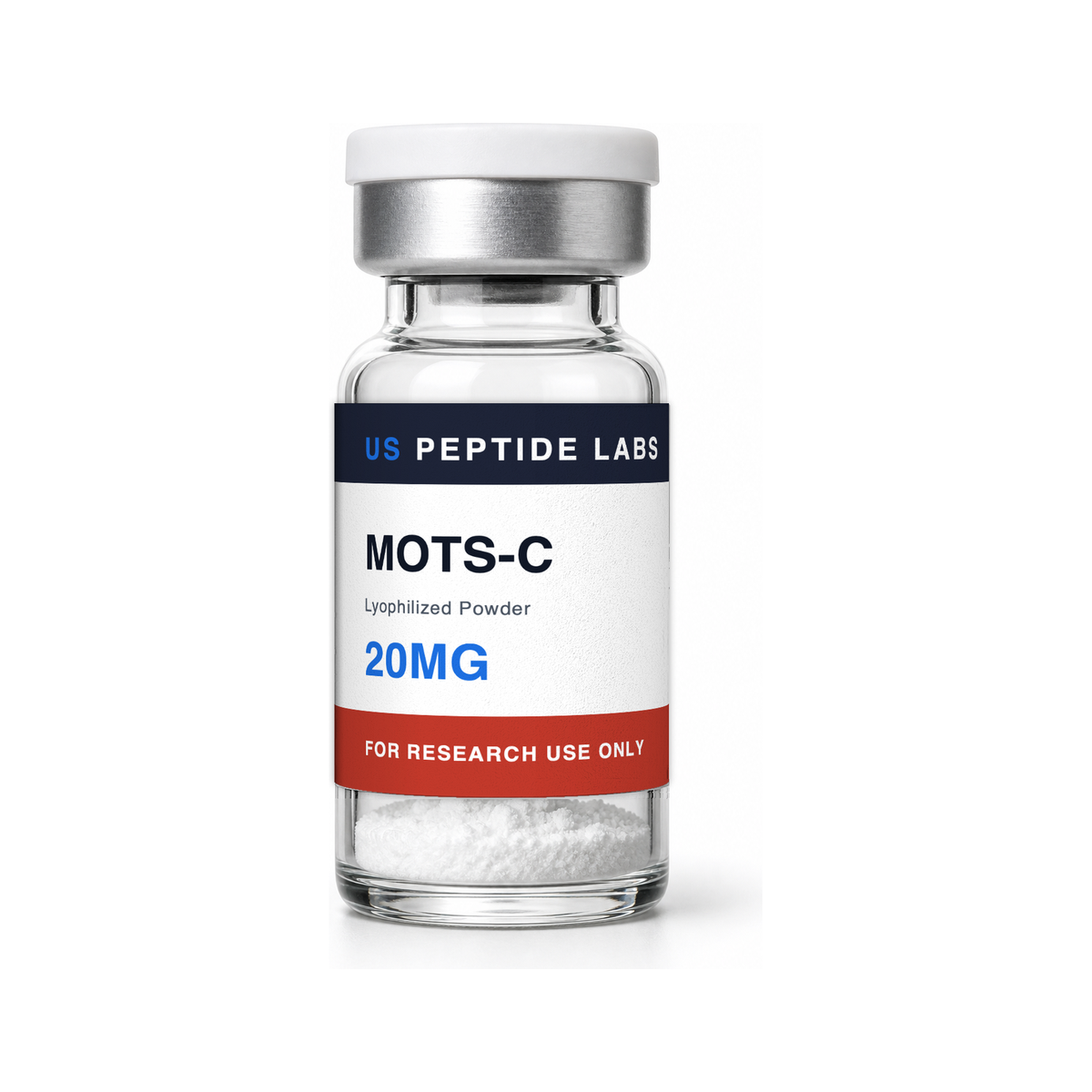
Vial products ship as dry lyophilized material unless the product format explicitly states otherwise.
10mL Vial99%+ PurityPerformance & Vitality
10mL Vial
MOTS-c
Mitochondrial-derived peptide — metabolic research
$95.00
Volume pricing
Per-unit price drops automatically as quantity increases.
| Strength | 1 | 2+ | 5+ |
|---|---|---|---|
| 20mg | $95.00 | $90.25 | $85.50 |
Per-unit pricing at each quantity break, applied automatically at checkout.
Mitochondrial-derived peptide — metabolic research
Lot documentation
Certificate of Analysis
Your lot number is stamped on the base of the vial or bottle. Match it to the list to open the certificate for the exact material you received.
- Lots on file
- 5
- Laboratory
- AxisPharm, LLC
What the literature reports
MOTS-c is a mitochondrial open reading frame–encoded peptide studied for roles in metabolic homeostasis, exercise response, and age-related physical capacity in cell and animal models.
-
In mice, MOTS-c administration prevented high-fat-diet–associated obesity and insulin resistance and modulated skeletal-muscle metabolic pathways.
-
Exercise induced MOTS-c in human muscle and circulation; in aged mice, MOTS-c improved measures of physical performance and muscle homeostasis.
-
Under metabolic stress, MOTS-c translocated to the nucleus and altered nuclear gene expression related to cellular stress responses.
These summaries describe findings reported in published laboratory and clinical literature about this compound. They are provided for research context only. They are not claims about this product, and nothing here describes an intended use in humans or animals. This material is supplied strictly for laboratory research use.
Technical documentation
About MOTS-c
Technical overview
Mitochondrial-derived peptide (MDP)
MOTS-c is a mitochondrial-derived peptide encoded within the 12S rRNA region of the mitochondrial genome. Discovered and characterized in work led by Cohen and colleagues, it functions as a signaling molecule that links mitochondrial status to cellular and systemic metabolic responses.
Preclinical research is the backbone of the MOTS-c story. Mouse studies reported that MOTS-c promoted metabolic homeostasis and reduced diet- and age-associated insulin resistance phenotypes, with skeletal muscle emerging as an important target tissue. Later work described nuclear translocation under metabolic stress and regulation of nuclear gene expression, expanding the peptide beyond a purely cytosolic messenger. Human biology papers continue to map circulating levels and metabolite correlates.
For educational dosage pages, distinguish animal mg/kg experiments from informal human research-protocol milligram schedules circulating online. MOTS-c is discussed here strictly as a research compound and literature subject. Ranges below summarize what secondary research communities commonly cite and what primary papers established mechanistically—not a directive to administer the peptide.
Mechanism of action
MOTS-c is reported to influence one-carbon metabolism (folate/methionine cycle) and to activate AMPK-related energy-sensing pathways, especially in skeletal muscle contexts. Under metabolic stress it can traffic to the nucleus and adjust expression of genes involved in cellular metabolism and stress adaptation. Downstream readouts in models include improved glucose utilization, shifts in plasma metabolites, and resistance to high-fat-diet metabolic strain. The peptide is therefore framed as a mitokine-like messenger rather than a classical cell-surface hormone only.
Research applications
- metabolic homeostasis
- insulin sensitivity
- mitochondrial signaling
- exercise physiology models
- aging biology
Fields of active investigation, not claims. Investigation is not proof.
Mitochondrial biologists, endocrinology labs focused on insulin resistance, and geroscience groups tracking mitokines. Exercise physiologists examine MOTS-c as a candidate exercise-responsive signal. Clinical interest exists but large therapeutic registration programs are not the same as the early discovery literature.
Amounts reported in the literature
What published research and laboratory protocols document. These describe what was studied — they are not instructions, recommendations, or a protocol for use.
| Reported amount | Frequency | Route | Research context |
|---|---|---|---|
| 5 mg – 10 mg | 2-3 times weekly (as often described in secondary protocols) | subcutaneous | Commonly cited secondary research-protocol ranges for subcutaneous investigation (not a standardized approved dose) |
| no single figure reported | study-defined | injection (species-specific) | Preclinical metabolic studies (order-of-magnitude reference only) |
Handling and storage
Store lyophilized MOTS-c refrigerated or frozen per supplier COA, away from moisture and light. After reconstitution with bacteriostatic water, keep refrigerated and aliquot if freeze-thaw is a concern; observe labeled beyond-use dating.
Notes on combined research
Metabolic research sometimes discusses MOTS-c conceptually alongside other mitochondrial peptides (for example humanin family members) or alongside exercise interventions. Combining with incretin agonists is an uncontrolled idea online, not a validated co-protocol. Mechanistic clarity favors studying MOTS-c with defined diet/exercise covariates rather than large peptide stacks.
Analytical specifications
| Purity | ≥99.3% by HPLC |
|---|---|
| Format | 10mL Vial |
| Physical form | Lyophilized powder |
| Third-party laboratory | AxisPharm, LLC |
| Lots with COA on file | 5 |
| Also referred to as | Mitochondrial ORF of the 12S rRNA type-c, mitochondrial-derived peptide MOTS-c |
| Reported half-life | Reported as relatively short for the native peptide in secondary pharmacokinetic descriptions; exact human PK depends on route and assay (confirm in primary PK reports when available) |
Identity and purity are documented per lot on the Certificate of Analysis for the material you receive. Lot, manufacture and expiry are stamped on the base of the vial or bottle.
Frequently asked questions
What is the dosage for MOTS-c?
No FDA-approved human dose exists for general use. Secondary research-protocol sources often mention multi-milligram subcutaneous amounts several times per week (commonly discussed near 5-10 mg weekly total). Primary literature dose tables are mostly animal mg/kg. Treat blog numbers as unverified unless tied to a methods section.
How much bac water for MOTS-c?
For a 10 mg vial, 1-2 mL bacteriostatic water yields 10 or 5 mg/mL, which keeps weekly research aliquots easy to measure. For a 40 mg vial, 2-3 mL is a frequent choice. Always recompute units after measuring the actual diluent added.
MOTS-c dosage per day
Many informal protocols prefer several weekly injections rather than true daily microdosing. If a source lists a daily figure, convert it to weekly exposure and compare against the commonly cited 5-10 mg/week band, then verify against any primary human study you are following.
MOTS-c dosage chart
Chart concentration versus syringe units. Example: 10 mg in 2 mL = 5 mg/mL; 0.2 mL = 1 mg; 1.0 mL = 5 mg. Separate rows for twice-weekly versus three-times-weekly schedules help avoid double-counting weekly totals.
How long does MOTS-c take?
Mouse metabolic endpoints are often measured over days to weeks of dosing. Human exploratory work and analog programs use study-specific durations. There is no single validated results timeline for educational marketing claims.
What is the half life of MOTS-c?
Native mitochondrial peptides are generally not ultra-long-acting biologics. Use primary pharmacokinetic reports when available; do not assume weekly exposure equals a one-week biological half-life.
Can MOTS-c be stacked?
Research designs may combine MOTS-c with exercise, diet challenges, or other metabolic readouts. Stacking multiple uncharacterized research peptides simultaneously weakens causal inference. Prefer controlled single-variable studies.
References
Every reference below resolves to an indexed paper. We would rather cite less and cite accurately.
- The mitochondrial-derived peptide MOTS-c promotes metabolic homeostasis and reduces obesity and insulin resistance.
- MOTS-c: A novel mitochondrial-derived peptide regulating muscle and fat metabolism.
- The Mitochondrial-Encoded Peptide MOTS-c Translocates to the Nucleus to Regulate Nuclear Gene Expression in Response to Metabolic Stress.
- MOTS-c: A promising mitochondrial-derived peptide for therapeutic exploitation.
Research use only
For laboratory and research purposes only. Not for human consumption, veterinary use, or medical applications. This product is not a drug, food, supplement or cosmetic, is not approved by the FDA, and is not intended to diagnose, treat, cure or prevent any disease. This page summarises published scientific literature; it is not medical advice and not a recommendation to use this compound. All handling must be performed by qualified personnel in a controlled laboratory environment.
Made in America. Documented lot by lot.
Most peptides sold in this category are imported in bulk, repackaged, and sold with no paperwork attached to the material in the bottle. Ours are synthesized in United States laboratories and every lot carries its own certificate.
Where is this material made?+
In United States laboratories. We buy from domestic synthesis rather than importing finished bulk from an overseas supplier and relabeling it. That is the reason we are able to name a specific laboratory, lot and test date for what you receive.
Why does a US laboratory matter?+
A domestic supply chain is shorter and documented end to end: identifiable facilities operating under US laboratory practice, and paperwork that follows one specific lot instead of a generic product description. It also means shorter transit and no repackaging between the laboratory and the customer.
What documentation comes with a lot?
A lot-specific Certificate of Analysis from an independent laboratory. The lot number is stamped on the base of the container — match it against the certificates listed on this page, or scan the QR code on the label, to open the report for the exact material shipped.
Where does my order ship from?+
Our United States facility, packed and dispatched domestically with tracking. Orders do not transit customs or get repackaged en route.
Pairs well with.
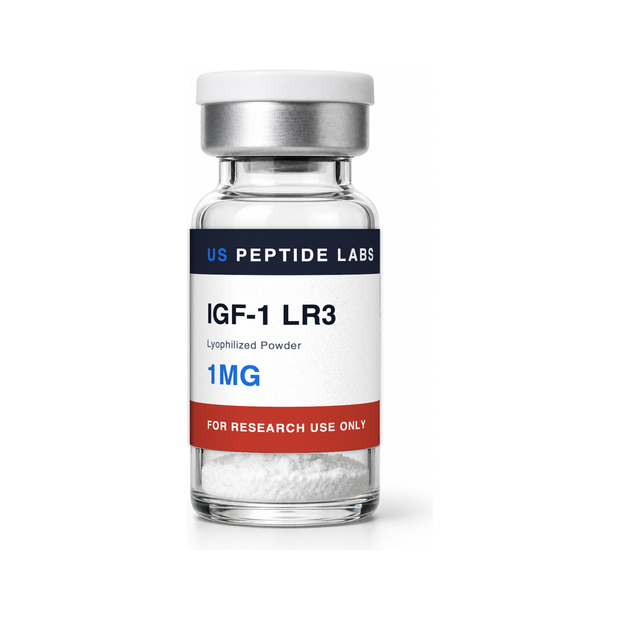
Research Peptide
IGF-1 LR3
IGF-1 LR3 supplied as lyophilized powder in a 10 mL vial for laboratory research use only. E...
$140.00